Asset Finance

Asset Finance in Sydney

Equipment, machinery and vehicle finance for every business. Chattel mortgage, hire purchase, finance lease. Compare 50+ lenders, $0 broker fee.

50+Lenders
FastPre-approval
$0Broker Fees
5.0/5 Rating340+ Reviews
13+ YearsTrusted Professionals
100% SatisfactionProven results for 2000+ clients

Start Here

Book Your Free Assessment

No credit check, no obligation. Leave your details and we'll get back to you.

No Credit Check100% Obligation-Free
Join hundreds of clientsWe respond within 24 hours
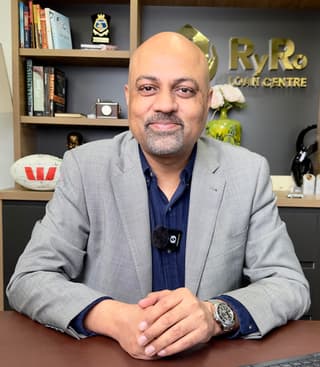
Sumit - Director & Senior Loan Specialist

“Just tell us what you're buying, we'll match you to the right lender. No pressure, no obligation.”

Sumit · Director & Senior Loan Specialist

By submitting, you agree to our privacy policy and terms of service.

The Ryro Team

Our team helps Sydney businesses secure the right asset finance. We compare 50+ lenders — major banks, specialist equipment finance providers and non-bank lenders — and match you to the right product, structure and rate. $0 broker fee; we are paid by lenders upon settlement. Norwest-based, we work with businesses across the Hills District, Greater Sydney and all of NSW.

Meet the team
Sumit

Sumit

Director & Senior Loan Specialist

Rohan

Rohan

Asset Finance Specialist

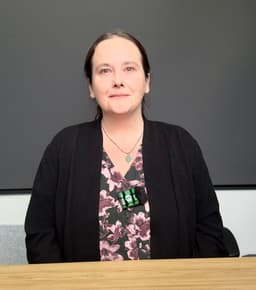
Kathryn

Kathryn

Settlement & Client Liaison

Why work with us

50+Lenders
FastPre-approval
$0Broker Fees
5.0/5 Rating340+ Reviews
13+ YearsTrusted Professionals
100% SatisfactionProven results for 2000+ clients
Overview

Overview of Asset Finance

Every business runs on assets — vehicles, machinery, equipment and technology. Asset finance lets you acquire them without paying the full cost upfront, so you preserve cash flow and often improve your tax position. Below is what you need to know about how it works, the main structures, and how we help Sydney businesses get the right deal.

What is asset finance?

Asset finance is any funding arrangement that lets a business acquire a physical asset — a vehicle, machine, equipment or technology — without paying the full purchase price upfront. You make regular repayments over an agreed term and the asset typically acts as security, which is why rates are often lower than unsecured business loans.

Main structures

The five main structures are chattel mortgage (you own the asset from day one; most common for vehicles and equipment), hire purchase (rent-to-own; ownership transfers at the end), finance lease (lender owns the asset; you have an option to purchase at residual), operating lease (short-term rental; return the asset at the end), and novated lease (salary-packaged vehicle for employees). The right one depends on your ownership goals, tax position and cash flow.

What can be financed?

Trucks, utes, vans, excavators, forklifts, farm machinery, medical and dental equipment, hospitality and commercial kitchen equipment, IT and office equipment, construction plant and manufacturing machinery. New and second-hand. Most tangible business assets qualify; some lenders have restrictions on very old or highly specialised assets.

Rates and terms

Chattel mortgage rates from around 6.5%–12% p.a. depending on asset type, age and your profile. Finance lease and hire purchase sit in a similar range. Terms are typically 1–7 years. No deposit is usually required — the asset is the security. The $20,000 Instant Asset Write-Off (to 30 June 2026) can apply to eligible assets under the threshold.

Why use a broker?

Your bank only offers its own products. A broker compares 50+ lenders — including specialist equipment and vehicle finance providers — and knows which are most competitive for your asset type and business profile. That typically means a better rate and the right structure (e.g. upfront GST on a chattel mortgage vs progressive GST on a lease).

Get a free assessment

Tell us about the asset and your business and we'll outline your options, likely structure and next steps. No obligation, no credit check. Many standard equipment finance applications receive same-day or next-business-day approval.

Start Here

Get an Asset Finance Quote

Tell us about the asset and your business. We'll match you to the right lender and structure. Free, no obligation.

No Credit Check100% Obligation-Free
Join hundreds of clientsWe respond within 24 hours
Sumit - Director & Senior Loan Specialist

“Just tell us what you're buying, we'll match you to the right lender. No pressure, no obligation.”

Sumit · Director & Senior Loan Specialist

By submitting, you agree to our privacy policy and terms of service.

Overview

Asset Finance Sydney: Fund Your Business Assets Without Draining Your Cash

Every business runs on its assets — the vehicles, machinery, equipment, tools, and technology that generate revenue day in, day out. The challenge isn't usually whether to acquire these assets. The challenge is how to structure that acquisition to protect your cash flow, maximise your tax position, and access the most competitive rate available.

That's exactly what asset finance is designed to do.

RyRo Loan Centre is a Sydney-based finance broker operating from Norwest in the Hills District. We compare asset finance options from over 50 lenders — major banks, specialist equipment finance providers, non-bank lenders, and commercial finance companies — to match your business with the right product, structure, and rate. Our service is completely free to you. We are paid by lenders upon settlement, not by the businesses we help.

This page covers every major asset finance structure available to Sydney businesses in 2026, including chattel mortgages, hire purchase, finance leases, operating leases, novated leases, and vehicle and machinery finance — along with current rates, tax implications, eligibility requirements, the Instant Asset Write-Off, and how to choose the right structure for your specific situation.

Got questions or need help? Book a free call with us.

Understanding

What Is Asset Finance?

Asset finance is any funding arrangement that allows a business to acquire a physical asset — a vehicle, a piece of machinery, equipment, technology, or other commercial property — without paying the full purchase price upfront from operating cash.

Rather than depleting your working capital on a large asset purchase, asset finance spreads the cost over an agreed term through regular repayments. The asset itself typically acts as security for the finance arrangement, which is why asset finance often offers lower rates than unsecured business loans of equivalent size.

According to the Australian Bureau of Statistics, Australian businesses invested approximately $23.59 billion in equipment and machinery in the three months to September 2025 alone — a year-on-year increase of 9.9%. Over 90% of Australian businesses finance their equipment purchases rather than paying cash outright, according to industry data from Lend.

Asset finance is used by businesses of every size and structure, from sole traders buying a single ute to large companies financing entire fleets or production machinery. The right structure depends on your ownership goals, tax position, business cashflow, and the type of asset involved.

Got questions or need help? Book a free call with us.

Rates

Current Asset Finance Interest Rates: Sydney, 2026

Asset finance rates vary by product structure, lender, asset type, and business profile. The following are current indicative market rates as of February 2026.

Finance TypeRate Range (p.a.)Notes
Chattel mortgage — new vehicle/equipment~6.5%–10%Lowest rates for prime borrowers, new assets
Chattel mortgage — used equipment~7.5%–12%Higher rate reflects increased lender risk
Commercial hire purchase~7%–12%Similar to chattel mortgage, slightly varied structure
Finance lease~8%–13%Lender retains ownership; rates slightly above chattel mortgage
Operating leaseRental payment; not a traditional interest rateFull cost claimed as deductible expense
Equipment finance (general)7%–20%Wider range based on business profile and asset type
Low doc equipment finance~10%–18%Less documentation, higher rate
Second-hand equipment finance~9%–18%Age, condition, and asset type affect rate significantly

Key rate context — February 2026:

  • The RBA cash rate was increased to 3.85% in February 2026, with major lenders including Westpac passing the full 0.25% increase through from 17 February 2026
  • In October 2025, industry data indicated chattel mortgage rates typically ranging from 7%–11% p.a. for prime borrowers
  • Finance lease rates sit approximately 0.5%–1.5% p.a. above equivalent chattel mortgage rates in most cases
  • Average chattel mortgage amounts (2025 Money.com.au data): $71,430 for vehicles and $157,728 for machinery or equipment
  • Approximately 65% of Australian business vehicle finance uses chattel mortgage structures; finance leases account for ~25%

What drives your rate:

  • Whether the asset is new or second-hand (new assets attract lower rates)
  • The asset type and its resale liquidity (vehicles attract lower rates than specialised equipment)
  • Your business credit score and trading history
  • Your business's monthly turnover and cashflow
  • The size of the loan (larger loans generally attract better rates)
  • Whether you're financing through a broker (who can compare across 50+ lenders) or a single lender directly

Got questions or need help? Book a free call with us.

Structures

Asset Finance Structures: Which One Is Right for Your Business?

There are five main asset finance structures used by Sydney businesses. Understanding how each one works — and how they differ in terms of ownership, tax treatment, and cashflow — is critical to making the right choice.

1. Chattel Mortgage

A chattel mortgage is the most commonly used asset finance structure for Australian businesses. It accounts for approximately 65% of all business vehicle and equipment finance in Australia.

How it works: Your business purchases the asset outright. The lender provides the funds and registers a security interest (mortgage) over the asset on the Personal Property Securities Register (PPSR) until the loan is fully repaid. From day one, the asset is yours — it sits on your balance sheet, you can use it freely for business purposes, and you bear the costs of maintenance and insurance. Once you make the final repayment, the lender discharges the PPSR registration and you hold the asset free and clear.

Key features:

  • Your business owns the asset from day one
  • Asset appears on your balance sheet (depreciation claimed)
  • Lender registers a PPSR interest over the asset as security
  • Fixed or variable rate options available (most businesses choose fixed for budget certainty)
  • Optional balloon/residual payment at the end to reduce monthly repayments
  • Terms: typically 1–7 years
  • No deposit usually required — the asset itself is the security

Tax benefits (for GST-registered businesses): You can claim the full GST on the purchase price in your next BAS (an immediate cash flow benefit). For passenger vehicles, the GST credit is capped at 1/11th of the ATO's car depreciation limit ($69,674 for 2025–26; max GST claim ~$6,334). This cap does not apply to commercial vehicles (utes, trucks, vans). The interest component of repayments is generally tax deductible; you claim depreciation on the asset over its effective life.

Best for: Businesses that want immediate ownership, maximum upfront GST and tax benefits, and a clear repayment schedule. Ideal for vehicles, trucks, plant and machinery, and equipment with a long productive life.

2. Hire Purchase (Commercial Hire Purchase / CHP)

A commercial hire purchase is a "rent-to-own" arrangement. The lender (lessor) purchases the asset and "hires" it to your business for regular repayments. Ownership transfers to you only when you make the final repayment (or pay out the residual/balloon at the end of the term).

Key features: Lender owns the asset during the term; you gain full ownership at end. Asset is treated as if owned by your business for accounting purposes. Fixed interest rate. Optional balloon payment. You are responsible for maintenance and insurance. Terms: typically 1–7 years.

Tax treatment: Interest deductible; depreciation can generally be claimed; GST on the purchase price can typically be claimed upfront on your BAS (similar to chattel mortgage).

Best for: Businesses wanting full asset ownership as an end goal and similar tax outcomes to a chattel mortgage. Common in hospitality and retail for commercial kitchen and fit-out equipment.

3. Finance Lease (Capital Lease)

The lender purchases the asset and rents it to your business for an agreed term. You have full use of the asset but the lender retains legal ownership. At the end you typically have three options: purchase the asset at the pre-agreed residual value, refinance the residual, or return the asset and walk away.

Key features: Lender owns the asset throughout. Lease payments are generally fully tax deductible. GST is claimed progressively on each lease payment (not upfront as with chattel mortgage). No depreciation claimed by you (lender claims it). Finance lease rates are typically 0.5%–1.5% higher than equivalent chattel mortgage rates. Terms: typically 2–7 years.

Best for: Businesses that prefer even, predictable cashflow rather than upfront GST and tax claims, those that regularly upgrade equipment and value the option to return assets.

4. Operating Lease

A shorter-term rental where the lender owns the asset throughout and bears the residual value risk. You pay rent to use the asset; at the end you return it. No obligation or expectation of purchase.

Key features: No end-of-term purchase obligation. Full rental payments are generally tax deductible. Ideal for technology and equipment that becomes obsolete quickly. Enables regular upgrades without residual risk. Often used for IT equipment, photocopiers, office technology.

Best for: Businesses that regularly need the latest equipment or technology, want to avoid residual value risk, and prefer predictable rental expense.

5. Novated Lease (for Employees and Employers)

A three-way arrangement between an employee, their employer, and a finance company. Primarily used for personal vehicles, structured through the employer's salary packaging. The employer makes lease payments on behalf of the employee, deducting the cost from the employee's pre-tax salary — reducing the employee's taxable income.

Key features: Payments made from pre-tax salary. Running costs can be bundled into the pre-tax deduction (fully-maintained novated lease). Fringe Benefits Tax (FBT) applies to most vehicles at 20% of the car's base value (statutory formula). FBT exemption applies to eligible Battery Electric Vehicles (BEVs) below the Luxury Car Tax threshold ($91,387 for FY 2025–26). PHEVs lost their FBT exemption from 1 April 2025 for new leases. ATO minimum residual values apply at end of term. FBT year runs 1 April to 31 March.

Best for: Salaried employees earning $60,000+, businesses wanting to offer competitive remuneration packages, and employees considering new EVs (where full FBT exemption makes savings very significant).

Got questions or need help? Book a free call with us.

Asset types

Asset Finance by Asset Type

Truck Finance and Commercial Vehicle Finance

Trucks, semi-trailers, tipper trucks, refrigerated trucks, and other heavy commercial vehicles are among the most commonly financed assets in Sydney and NSW. Typical structure: Chattel mortgage is dominant — the vehicle serves as security and the business claims ownership, depreciation, and GST upfront. Commercial vehicles (>4.5 tonnes GVM) are not subject to the ATO passenger vehicle depreciation cap. Interest rate: from ~6.5%–12% p.a. Terms: typically 2–7 years. Average amounts: from $30,000–$40,000 for a second-hand ute to $300,000+ for a new prime mover.

Ute Finance and Light Commercial Vehicle Finance

Utes and light commercial vehicles are among the most popular financed assets for Sydney tradespeople and construction businesses. Most utes are classified as commercial vehicles (not passenger vehicles), meaning no ATO depreciation cap and full GST credit on the entire purchase price. Chattel mortgage is overwhelmingly preferred — the full $5,000–$6,500+ GST on a new ute can be claimed immediately in the next BAS. The $20,000 Instant Asset Write-Off may apply to utes under the threshold.

Van Finance

Commercial vans are financed using the same structures as utes and trucks. Key consideration: whether the van is a panel van (commercial) or a people-mover (may be classified as passenger vehicle for ATO purposes). Most standard commercial panel vans do not have the GST cap applied.

Excavator Finance and Plant and Machinery Finance

Construction and civil infrastructure businesses rely on finance for excavators, bobcats, loaders, compactors, concrete pumps, and other heavy plant. Typically chattel mortgage or hire purchase. Equipment age and condition are critical; most lenders have maximum age requirements (typically 10–20 years at end of term). Finance amounts: from $15,000 for a compact excavator to $500,000+ for large plant.

Forklift, Farm, Medical & Hospitality Equipment

Forklift finance: Chattel mortgage and hire purchase are most common; finance leases work well for businesses that rotate forklifts regularly.

Farm machinery: Tractors, harvesters, irrigation systems — same structural options, often with specialist rural finance lenders and longer terms to align with seasonal income.

Medical equipment: Finance leases common for technology-heavy equipment (e.g. imaging) that needs upgrading; chattel mortgages suit long-life assets.

Hospitality equipment: Commercial ovens, coffee machines, refrigeration, dishwashers, POS systems. Hire purchase is particularly popular; fitout finance (premises fit-out) is typically an unsecured business loan or line of credit.

Technology Finance (Office & IT Equipment)

IT equipment, computers, servers, tablets, and software can all be financed. Operating leases are frequently used for technology — allowing upgrades at the end of a 24–36 month term. Chattel mortgage remains an option for longer-life technology. Computer equipment finance available from $2,000 upwards.

Vehicle Finance for Business (Business Car Finance)

When a business finances a car (passenger vehicle) for business use, the key consideration is the ATO passenger vehicle cap. ATO car limit for depreciation and GST — FY 2025–26: $69,674. For a car costing more than $69,674, you cannot claim GST or depreciation on the portion above the limit. Maximum GST claim $6,334 (1/11th of $69,674). This cap does not apply to most utes, trucks, vans, and other vehicles designed to carry goods or more than eight passengers. Minimum business use for chattel mortgage: The asset must be used for business purposes at least 51% of the time.

Fleet Finance

Fleet finance involves financing multiple vehicles or assets simultaneously. Businesses with three or more vehicles often benefit from fleet pricing — bulk discount rates through fleet-specialist lenders and brokers.

Got questions or need help? Book a free call with us.

Comparison

Lease vs Hire Purchase vs Chattel Mortgage: The Comparison Table

FeatureChattel MortgageHire PurchaseFinance LeaseOperating Lease
Who owns asset during term?You (business)LenderLenderLender
Ownership at endAlready yoursTransfers to you on final paymentOption to purchase at residualReturn asset — no obligation
GST claimUpfront in next BASUpfront in next BASProgressive on each paymentProgressive on each payment
Interest deductible?YesYesN/A — full payment deductibleN/A — full rental deductible
Depreciation claimed by?You (business)You (business)LenderLender
Balloon/residual?OptionalOptionalYes (ATO minimum for vehicles)No — return asset
Typical rate range~6.5%–12% p.a.~7%–12% p.a.~8%–13% p.a.Rental based
Best forOwnership + max upfront taxOwnership commitment + predictable paymentsRegular upgrades + even cashflowShort-term use + upgrade flexibility

Got questions or need help? Book a free call with us.

Balloons

Balloon Payments in Asset Finance: How They Work

A balloon payment (also called a residual payment) is an optional lump sum at the end of a loan or lease term that reduces your regular monthly repayments. A portion of the principal is deferred to the end.

Example: A business finances a $120,000 excavator via chattel mortgage over 5 years at 9% p.a. with a 25% balloon payment ($30,000).

  • Monthly repayment (with balloon): approximately $1,870
  • Monthly repayment (without balloon): approximately $2,488
  • At end of term: pay out the $30,000 balloon (from savings, trade-in proceeds, or by refinancing into a new loan)

Advantages: Lower monthly repayments free up day-to-day cashflow; allows upgrade or trade-in at end of term (common for vehicles); useful for assets with strong resale values.

Considerations: You will pay more total interest over the life of the loan when a balloon is included; you must have a plan for settling the balloon at term end (savings, refinance, or trade-in). For novated leases and finance leases on motor vehicles, the ATO sets mandatory minimum residual values that cannot be set below prescribed percentages.

Got questions or need help? Book a free call with us.

Tax

The $20,000 Instant Asset Write-Off: 2025–26

The Australian Government has legislated an extension of the $20,000 Instant Asset Write-Off (IAWO) through to 30 June 2026 (Treasury Laws Amendment (Strengthening Financial Systems and Other Measures) Act 2025, passed November 2025).

What is it? The Instant Asset Write-Off allows eligible small businesses to claim the full cost of a qualifying asset as an immediate tax deduction in the financial year the asset is first used or installed ready for use — rather than depreciating it over several years.

Key rules for FY 2025–26:

  • Threshold: $20,000 per asset (each asset assessed individually)
  • Eligibility: Businesses with aggregated annual turnover of less than $10 million
  • Timing: Asset must be first used or installed ready for use between 1 July 2025 and 30 June 2026. Ordering before 30 June is not sufficient — the asset must be operational by that date.
  • Asset types: New and second-hand eligible depreciating assets used for business purposes (vehicles, machinery, equipment, IT, tools)
  • Applies to: Sole traders, partnerships, companies, trusts
  • Assets $20,000+: Must be placed in the small business simplified depreciation pool (15% first year, 30% each subsequent year)
  • From 1 July 2026: The threshold reverts to $1,000 unless further extension is passed

Practical examples:

  • A plumber buys a $14,000 set of tools and installs them in July 2025 — full $14,000 claimed immediately.
  • A café buys a $19,500 commercial espresso machine, installed and operational by November 2025 — full $19,500 deductible immediately.
  • A construction company buys a $22,000 concrete saw — above $20,000 threshold, so must be depreciated through the small business pool (not eligible for instant write-off).

Important interaction with asset finance: You can use asset finance (chattel mortgage or hire purchase) to fund assets under the $20,000 threshold and still claim the full Instant Asset Write-Off — you don't have to buy the asset outright. You claim the deduction on the full asset cost, and your repayments continue on the loan. Claim the full tax deduction now while spreading the actual cash cost over 2–5 years of repayments.

Always verify your specific eligibility with a qualified tax adviser or accountant before making purchases in reliance on this concession.

Got questions or need help? Book a free call with us.

PPSR

The PPSR: What It Means for Asset Finance

The Personal Property Securities Register (PPSR) is Australia's national online register for recording security interests in personal property — including vehicles, machinery, equipment, and other business assets. It is administered by the Australian Financial Security Authority (AFSA) and has operated nationally since 30 January 2012.

In the context of asset finance: When a lender provides funds under a chattel mortgage or hire purchase, they register their security interest on the PPSR. This registration gives the lender legal protection, notifies third parties that the asset is subject to finance, and ensures the lender can repossess and recover proceeds if the borrower defaults.

In 2024–25, 2.2 million new PPSR registrations were created (2.2% increase on prior year); commercial registrations accounted for 79.1%. Motor vehicles (69%) and other goods/equipment (22.4%) dominate the register.

What this means for you: When you finance an asset via chattel mortgage or hire purchase, expect a PPSR registration to be placed against the asset's serial number or VIN. This is discharged (removed) once you complete all repayments and the lender releases the security interest.

When purchasing a used asset: Always run a PPSR check (currently $2 per serial number search) before purchasing any second-hand vehicle, plant, or equipment. A PPSR check confirms whether any outstanding finance or security interests remain. Buying an asset with an existing registered security interest can mean the original lender has the right to repossess it — even from you as the new owner.

Got questions or need help? Book a free call with us.

Eligibility

Asset Finance Eligibility Requirements

Eligibility criteria vary by lender, product, and asset type. General requirements across the Sydney market:

All applicants:

  • Active ABN or ACN
  • Australian citizen, permanent resident, or eligible visa holder
  • Minimum 18 years of age
  • The asset must be used for business purposes at least 51% of the time (for business asset finance products)

Standard asset finance (chattel mortgage, hire purchase, finance lease):

  • Typically no minimum trading history for simple, low-value equipment loans under $100,000–$150,000 — some lenders approve on the basis of the asset value alone
  • For loans above $150,000 most lenders request business bank statements and/or financial statements
  • Clean credit history preferred; adverse credit considered by specialist lenders
  • The asset itself must meet lender requirements for age, condition, and type

Low doc asset finance: ABN, photo ID, and either bank statements or BAS statements as income evidence. Available for new businesses and self-employed borrowers without full tax returns. Rates are higher than full-doc products.

Asset age and condition (indicative): Most lenders: vehicle/equipment must not exceed 10–15 years old at the end of the loan term. Some specialist lenders extend to older equipment. Condition: must be in operational, roadworthy/usable condition; written-off or severely damaged assets not eligible.

Excluded by some lenders (varies): Assets over 20 years old; speculative collectibles; assets in industries restricted by specific lenders (e.g. gambling, adult entertainment, cannabis-related).

Got questions or need help? Book a free call with us.

Documents

Documents Required for Asset Finance

Simple applications (equipment under $100,000–$150,000):

  • Government-issued photo ID for all directors/owners (driver's licence or passport)
  • Active ABN documentation
  • Invoice or quote for the asset (make, model, year, serial number, purchase price)
  • May require business bank statements for 90 days (varies by lender and amount)

Larger or more complex applications (above $150,000):

  • Last 2 years of business tax returns
  • Last 2 years of financial statements (profit & loss, balance sheet)
  • Last 6–12 months of business bank statements
  • ATO Notices of Assessment for directors
  • Details of existing finance facilities

Used equipment: As above, plus condition report or independent valuation may be requested for high-value used assets; some lenders request evidence of service history for used vehicles and machinery.

For many simple, low-value equipment purchases (under $50,000–$100,000), online lenders and specialist equipment finance providers can assess and approve on a "light touch" basis — ID, ABN, and the asset invoice are often all that's needed. A broker can identify which lenders offer this for your situation.

Got questions or need help? Book a free call with us.

Business types

Asset Finance for Specific Sydney Business Types

Tradespeople and Contractors (Tradies): Plumbers, electricians, builders, concreters, landscapers, air conditioning installers. Chattel mortgage on commercial utes is the most common product. Asset finance for tradies: ute finance, tool and equipment finance, trailer finance, compressor finance, generator finance, scaffolding. The Instant Asset Write-Off makes tools and equipment under $20,000 particularly attractive.

Construction Companies: Excavators, bobcats, concrete pumps, dump trucks, scaffolding, compactors. Specialist plant and machinery lenders often provide better rates and more flexible age criteria than major banks.

Healthcare and Allied Health: Dental practices, physiotherapy clinics, veterinary practices, medical imaging. Finance leases common for rapidly depreciating or technology-sensitive equipment; chattel mortgages suit durable, high-value equipment with a 10–20 year useful life.

Retail and Hospitality: POS systems, refrigeration, commercial dishwashers, coffee machines, display fridges, kitchen equipment. Commercial hire purchase is popular. Fitout finance for premises renovations is available as an unsecured business loan or line of credit.

Transport and Logistics: Trucks, trailers, tautliners, refrigerated trucks. Commercial vehicle finance (chattel mortgage or hire purchase). Fleet finance for multiple vehicles. Invoice finance can complement truck finance for cashflow between deliveries and payment.

Professional Services (Accounting, IT, Legal): Office equipment, IT infrastructure, server hardware. Operating leases and short-term finance leases suit IT equipment (3–4 year upgrade cycle). Chattel mortgage suits durable office furniture and fit-out assets.

Agriculture (NSW Rural): Tractors, harvesters, irrigation equipment, spray rigs, farm vehicles. Rural and agricultural lenders offer specialised asset finance aligned with seasonal income — balloon payments and interest-only periods can be structured to match crop cycles.

Got questions or need help? Book a free call with us.

Comparison

Asset Finance vs Business Loan: Which Is Better?

Use asset finance (chattel mortgage, hire purchase, lease) when:

  • You are purchasing a specific, identifiable asset (vehicle, machine, equipment)
  • You want to maximise the tax benefit on that specific asset (upfront GST, depreciation)
  • You want the asset to serve as its own security — avoiding the need to pledge other business or personal assets
  • The asset finance rate is competitive (generally lower than unsecured business loan rates)

Use an unsecured business loan when:

  • You need to fund general business purposes rather than a specific asset
  • The asset doesn't meet standard finance criteria (too old, too specialised)
  • You need additional cashflow alongside the asset purchase
  • Speed is the priority and the asset finance application would take too long
  • The asset value is below lender minimums for dedicated equipment finance

In most cases involving a specific asset acquisition, a dedicated asset finance product (especially a chattel mortgage) will deliver better rates, better tax outcomes, and a cleaner finance structure than a general-purpose business loan.

Got questions or need help? Book a free call with us.

Refinancing

Refinancing Asset Finance and Restructuring Existing Finance

If your current equipment loan has a high interest rate, unfavourable terms, or no longer aligns with your business structure, refinancing is worth considering.

When asset finance refinancing makes sense:

  • Your credit profile has improved since the original loan (better rates now available)
  • You are paying a high dealer-arranged rate and have since found more competitive options
  • You want to extend or shorten the loan term to adjust your monthly repayments
  • The balloon payment is approaching and you need to refinance it rather than pay it out
  • You want to consolidate multiple equipment loans into a single facility

Compare asset finance rates: When refinancing, run a broker comparison across 50+ lenders to find the best available rate for your current profile and asset type. Even a 1%–2% rate reduction on a $150,000 equipment loan over 5 years can save thousands of dollars in total interest.

Got questions or need help? Book a free call with us.

Examples

Asset Finance Repayment Examples

Indicative figures only. Your actual rate and repayments will depend on your business profile, lender, asset type, and chosen structure.

Chattel Mortgage: $50,000 New Equipment, 5-Year Term

Interest RateMonthly RepaymentTotal Interest Paid
7% p.a.~$990~$9,400
9% p.a.~$1,038~$12,262
11% p.a.~$1,087~$15,218

Truck Finance: $200,000, 5-Year Term, 20% Balloon ($40,000)

Interest RateMonthly RepaymentBalloon at End
7% p.a.~$3,168$40,000
9% p.a.~$3,320$40,000
11% p.a.~$3,476$40,000

Equipment Finance: $80,000, 3-Year Term, No Balloon

Interest RateMonthly RepaymentTotal Interest Paid
7% p.a.~$2,470~$8,920
9% p.a.~$2,544~$11,584
12% p.a.~$2,660~$15,758

Got questions or need help? Book a free call with us.

Why RyRo

Why Use RyRo Loan Centre for Asset Finance in Sydney?

  • 50+ lenders compared. Our panel includes major banks, specialist equipment finance companies, non-bank lenders, and commercial vehicle finance providers — giving you genuine rate competition and product variety that isn't available through a single lender.
  • $0 broker fee. We are paid by lenders upon settlement. There is no charge to you for our service.
  • Sydney-based, Hills District specialists. We are based in Norwest and work with businesses across the Hills District, Greater Western Sydney, Parramatta, the Northern Beaches, and all of NSW. We understand the industries, asset types, and finance needs specific to Sydney's business community.
  • All asset types. Trucks, utes, vans, excavators, forklifts, farm machinery, medical equipment, commercial kitchen equipment, IT infrastructure, trailers, plant and machinery, and more. New and second-hand.
  • All business types. Sole traders, companies, trusts, partnerships. Tradies, builders, healthcare providers, hospitality operators, transport businesses, professional services. ABN holders, contractors, self-employed.
  • Fast approvals. Many standard equipment finance applications receive same-day approval. We target the lenders most likely to approve your profile, cutting wasted time and protecting your credit file from unnecessary hard enquiries.
  • Specialists in complex scenarios. Bad credit? Short trading history? Older equipment? Unusual asset type? We know which lenders in our panel are open to complex applications and will work with you to find the best available path.

Get an Asset Finance Quote · Book a Free Consultation · Call Our Norwest Office

Got questions or need help? Book a free call with us.

At a glance

Key Asset Finance Facts at a Glance

FeatureDetail
Chattel mortgage rates (from)~6.5% p.a. (prime borrower, new asset)
Finance lease rates (from)~8% p.a.
Hire purchase rates (from)~7% p.a.
Equipment finance range~7%–20% p.a.
Typical terms1–7 years
Deposit requiredGenerally not (asset = security)
Business investment in equipment (Q3 2025)$23.59 billion (ABS)
Businesses financing vs paying cashOver 90% finance (Lend data)
Average chattel mortgage — vehicle$71,430 (Money.com.au 2025)
Average chattel mortgage — equipment$157,728 (Money.com.au 2025)
Chattel mortgage market share~65% of business vehicle finance
GST cap (passenger vehicle, FY 2025–26)$69,674 (max GST claim ~$6,334)
IAWO threshold (FY 2025–26)$20,000 per asset (under $10M turnover)
IAWO deadline30 June 2026
PPSR registrations (2024–25)2.2 million new registrations (AFSA)
RBA cash rate (Feb 2026)3.85%
RyRo lenders compared50+
RyRo broker fee$0

All rate and statistical information is current as of February 2026. Asset finance rates, eligibility criteria, lender policies, and tax rules change regularly. This page provides general information only and is not financial or tax advice. Tax treatment of asset finance depends on your specific business structure, GST registration status, and asset use — always confirm with a qualified accountant before relying on tax information. Always verify your eligibility for the Instant Asset Write-Off with a registered tax adviser before purchasing assets in reliance on this concession. Lending criteria, fees, and terms and conditions apply.

Got questions or need help? Book a free call with us.

Rohan

I focus on asset finance for vehicles, equipment and business growth, we tailor solutions so you get the right structure and rates.

Rohan · Asset Finance Specialist

Free strategy call - no obligation

Get Expert Advice, Free

Tell us what you need and we'll match you to the right option.

No Credit Check100% Obligation-Free
Join hundreds of clientsWe respond within 24 hours

By submitting, you agree to our privacy policy and terms of service.

The Process

How to Apply for Asset Finance

  1. 1

    Identify the asset and get a quote or invoice

    You need a clear, written quote or invoice from the supplier. The quote should specify make, model, year, serial number, condition and purchase price.

  2. 2

    Choose the right structure

    Chattel mortgage, hire purchase, finance lease, or operating lease — the right choice depends on your ownership goals, tax position, cashflow and asset type. We can help you decide.

  3. 3

    Contact RyRo — free broker assessment

    We assess your business against our panel of 50+ lenders and identify which are most likely to approve, at what rate, without submitting a formal application that could affect your credit score.

  4. 4

    Gather your documents

    For most equipment finance under $150,000: photo ID, ABN, and the supplier invoice or quote. Larger applications require financial statements and bank statements.

  5. 5

    Application submitted

    We prepare and submit the application to the most suitable lender(s). Many receive same-day or next-business-day conditional approval.

  6. 6

    Approval and settlement

    Once approved, the lender pays the supplier. The PPSR interest is registered and your repayments commence. For chattel mortgages, claim your GST credit in the next BAS.

Got questions or need help? Book a free call with us.

Answers on demand

Asset Finance FAQs

Common questions about Asset Finance: eligibility, how to apply, and how it combines with other first home buyer schemes.

Why people ask

  • Clarity on eligibility and how much support you can access
  • Confidence you're getting the best combination of schemes from 50+ lenders
  • Peace of mind that we handle the application and lender paperwork

Our team

Sumit

Sumit

Director & Senior Loan Specialist

Rohan

Rohan

Asset Finance Specialist

Kathryn

Kathryn

Settlement & Client Liaison

Need something answered live? Talk to our team

1

Common questions

Asset finance is any commercial funding structure that allows a business to acquire physical assets — vehicles, machinery, equipment — without paying the full cost upfront. The business makes regular repayments over an agreed term. The asset typically serves as security for the finance. Common structures include chattel mortgage, hire purchase, finance lease, and operating lease.
Both lead to eventual full ownership of the asset, but with different ownership timing. Under a chattel mortgage, the business owns the asset from day one (and the lender holds a registered security interest). Under hire purchase, the lender owns the asset during the repayment term and ownership transfers to the business only after the final payment is made.
A finance lease typically runs for most of the asset's useful life and gives you an option to purchase at the end for a residual/balloon value. An operating lease runs for a shorter period; you return the asset at the end with no purchase obligation. Operating leases suit regularly upgraded technology and equipment; finance leases suit higher-value, longer-life assets.
Generally no. For chattel mortgage and hire purchase, the asset itself serves as security — no separate deposit is required in most cases. Some lenders may request a deposit for high-risk borrowers, older assets, or unusual asset types.
A balloon (or residual) payment is an optional lump sum deferred to the end of the loan term. It reduces your monthly repayments during the loan but must be settled at the end by payment from savings, trade-in proceeds, or refinancing into a new loan. For novated leases and finance leases on vehicles, minimum residual values are set by the ATO.
Yes, in many cases. Specialist asset finance lenders assess the asset value and the business's cashflow rather than relying solely on credit score. A strong asset with good resale value (like a late-model vehicle) combined with a demonstrable business income can be fundable even with imperfect credit history. Rates will be higher than for prime borrowers.
Yes. For GST-registered businesses, the full GST on the asset purchase price can be claimed as an input tax credit in the next BAS. For passenger vehicles, this GST credit is capped at 1/11th of the ATO's depreciation limit ($69,674 for FY 2025–26, equating to a maximum GST credit of ~$6,334). Commercial vehicles (utes, trucks, vans) generally do not have this cap.
The Instant Asset Write-Off allows eligible businesses (aggregated turnover under $10 million) to claim the full cost of assets costing less than $20,000 as an immediate tax deduction in the financial year the asset is first used. The extension to 30 June 2026 was legislated in November 2025. You can use asset finance to fund an eligible asset and still claim the full write-off — the deduction is based on the asset's cost, not your repayments. Always confirm eligibility with your accountant.
The Personal Property Securities Register (PPSR) is Australia's national online register for security interests in personal property, administered by the Australian Financial Security Authority (AFSA). When you finance an asset via chattel mortgage or hire purchase, the lender registers their security interest on the PPSR. For used asset purchases, always run a PPSR check ($2 per search) to confirm no existing registered security interests remain against the asset's serial number or VIN.
A chattel mortgage gives your business immediate ownership and allows upfront GST and depreciation claims. A lease keeps the asset with the lender, with GST claimed progressively on each payment. For businesses that want ownership and maximum upfront tax benefit, chattel mortgage is generally preferred. For businesses that regularly upgrade assets or want even cashflow, leasing may suit better.
Yes. Sole traders and ABN holders are eligible for most asset finance products. The business and the individual are the same legal entity for a sole trader, so both personal and business financial information will be considered. Low doc options are available for sole traders who cannot provide full tax returns.
Most tangible business assets: commercial vehicles (trucks, utes, vans), trailers, excavators, forklifts, farm machinery, medical and dental equipment, hospitality equipment, office equipment, IT hardware, construction plant, manufacturing machinery, and more. Some lenders have restrictions on very old assets, specialised assets with limited resale markets, or assets in certain industries.
For standard equipment under $150,000 with simple documentation, approval can occur same-day or next business day through online and non-bank lenders. Major bank applications typically take 3–10 business days. The speed of settlement also depends on how quickly the supplier can confirm the asset details and accept the lender's purchase order.
Fleet finance involves financing multiple business vehicles simultaneously, often through a dedicated fleet facility or by arranging individual chattel mortgages or hire purchases for each vehicle. Businesses with three or more vehicles often qualify for improved fleet rates. RyRo can arrange fleet pricing through specialist lenders and help structure the most efficient overall fleet finance arrangement.
Your bank can only offer their own products and rates. A broker compares 50+ lenders including major banks, specialist equipment finance companies, and non-bank lenders — across the full range of asset types and structures. A broker also understands which lenders are currently most competitive for your specific asset type and business profile, saving you time and typically delivering better rates.

Start here

Check your eligibility in 60 seconds

Leave your details and we'll get back to you. No credit check, no obligation.

No Credit Check100% Obligation-Free
Join hundreds of clientsWe respond within 24 hours

By submitting, you agree to our privacy policy and terms of service.

Got questions or need help? Book a free call with us.

RyRo Loan Centre

Ready to Get an Asset Finance Quote?

Get a free assessment against 50+ lenders. We identify the right structure and rate for your asset and business — no obligation, no broker fee.

Rohan - Asset Finance Specialist

I focus on asset finance for vehicles, equipment and business growth, we tailor solutions so you get the right structure and rates.

Rohan · Asset Finance Specialist

Meet the team

Rohan

Rohan

Asset Finance

Helping clients secure the right equipment and vehicle finance.
Kathryn

Kathryn

Settlement Liaison

Keeping your settlement on track from application to keys.

5.0/5 Rating340+ Reviews
13+ YearsTrusted Professionals
100% SatisfactionProven results for 2000+ clients
50+Lenders
FastPre-approval
$0Broker Fees
Get Started

Free strategy call - no obligation

We'll call you to discuss Asset Finance. No obligation.

No Credit Check100% Obligation-Free
Join hundreds of clientsWe respond within 24 hours

By submitting, you agree to our privacy policy and terms of service.