Help to Buy Scheme in Sydney
Government co-ownership: buy with 2% deposit. The government contributes up to 40% (new) or 30% (existing) and you co-own the property.
Start Here
Book Your Free Assessment
No credit check, no obligation. Leave your details and we'll get back to you.
“Just tell us what you're buying, we'll match you to the right lender. No pressure, no obligation.”
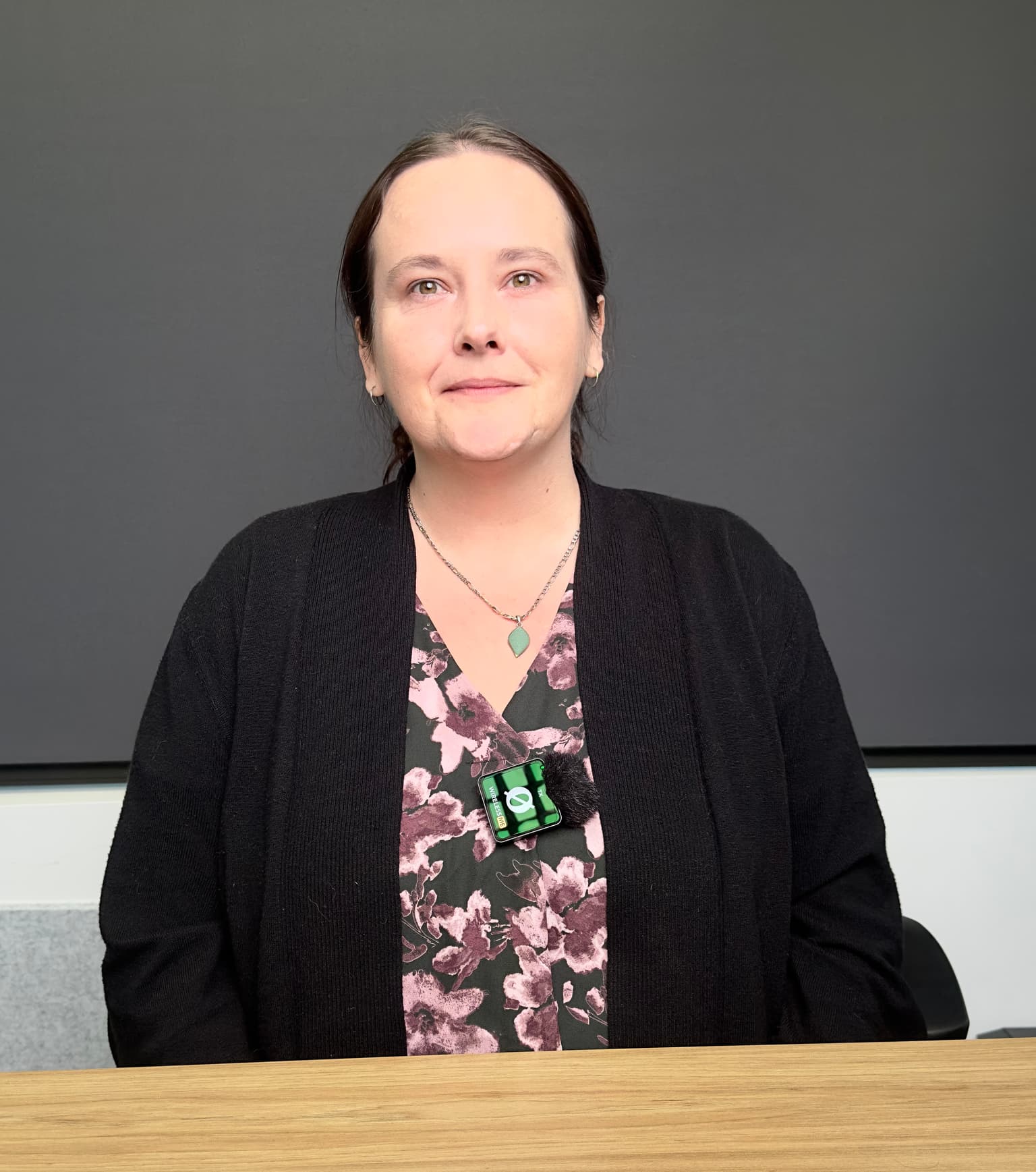
Sumit · Director & Senior Loan Specialist
By submitting, you agree to our privacy policy and terms of service.
The Ryro Team
Our team helps Sydney buyers – especially first home buyers, essential workers and returning buyers – understand whether Help to Buy or the 5% Deposit Scheme is the better fit. We compare both for your situation, check income and price caps, and guide you from pre-approval to settlement. No broker fees.

Sumit
Director & Senior Loan Specialist

Rohan
Asset Finance Specialist

Kathryn
Settlement & Client Liaison
Why work with us
Overview of the Help to Buy Scheme
The Australian Government Help to Buy Scheme is a shared equity program that lets eligible buyers purchase with as little as a 2% deposit, with the government contributing up to 40% for new homes or 30% for existing homes. Below is a short overview of how it works, who qualifies, and what to weigh up against the 5% Deposit Scheme.
Who is eligible?
How does shared equity work?
Key numbers for Sydney buyers
How to apply
Help to Buy vs 5% Deposit Scheme
Start Here
Check Your Help to Buy Eligibility
Free 30–45 minute assessment: we confirm your Help to Buy eligibility, compare it with the 5% Deposit Scheme, and map out your next steps. No credit check, no obligation.
“Just tell us what you're buying, we'll match you to the right lender. No pressure, no obligation.”
Sumit · Director & Senior Loan Specialist
By submitting, you agree to our privacy policy and terms of service.
What Is the Help to Buy Scheme and How Does It Work?
The Australian Government Help to Buy Scheme is a shared equity program that launched in December 2025. It allows eligible buyers to purchase a home with as little as a 2% deposit by having the government contribute up to 40% of the purchase price – becoming a co‑owner of your property. You take out a smaller mortgage, pay lower monthly repayments, and pay no Lenders Mortgage Insurance (LMI).
In Sydney, the property price cap is $1,300,000. Income limits are $100,000 for individuals and $160,000 for couples and single parents. There are 10,000 places available nationally per year – and as of early 2026, more than 2,300 have already been approved. If you are eligible, the time to apply is now.
Help to Buy is a shared equity scheme – not a grant, and not a guarantee. When you buy a home through the scheme, the Australian Government, through Housing Australia, contributes a portion of the purchase price and takes an equivalent equity stake in the property. You own the home and your name is on the title. The government registers a second mortgage over the property to secure its share, but you do not pay rent or interest on that share.
The government's contribution depends on the property type:
- Up to 40% of the purchase price for newly built homes, off‑the‑plan purchases, house and land packages, or vacant land with a construction contract
- Up to 30% of the purchase price for existing (established) homes
Because the government's contribution reduces the amount you need to borrow, your monthly mortgage repayments are lower than they would be without the scheme – potentially by hundreds of dollars per month. Combined with the ability to enter the market with just a 2% deposit, this makes home ownership accessible to buyers who have the income to service a mortgage but struggle to save a full deposit or borrow the full purchase price on their own income.
A plain‑language example
You want to buy an existing home in Greater Western Sydney for $850,000. You have saved $17,000 – that's your 2% deposit. The government contributes 30%, or $255,000. You borrow $578,000 from a participating lender. At a 6% interest rate over 30 years, your monthly repayments are approximately $3,465 – compared to $5,148 if you had borrowed the full $833,000 without assistance. That is a saving of approximately $1,683 per month. No LMI is charged because the combined deposit (yours plus the government's contribution) exceeds 20% of the purchase price.
The government's $255,000 stake is not a gift. When you eventually sell the property, refinance out of the scheme, or choose to buy back the government's share, the repayment is calculated as the same percentage of the property's value at that time. If the property has grown in value, the government's share grows proportionally. If it has fallen, its share falls too.
Key facts at a glance
| Minimum deposit | 2% of purchase price |
|---|---|
| Government contribution | Up to 40% (new homes) / up to 30% (existing homes) |
| LMI | None – combined deposit + government share exceeds 20% threshold |
| Income cap (individual) | $100,000 taxable income per year |
| Income cap (couples / single parents) | $160,000 combined taxable income per year |
| Sydney price cap | $1,300,000 |
| Rest of NSW cap | $800,000 |
| Annual places | 10,000 nationally (40,000 total over 4 years) |
| Participating lenders (at launch) | Commonwealth Bank and Bank Australia (more expected in 2026) |
| Property use | Owner‑occupier only; investment properties not eligible |
| Tasmania | Not participating at launch |
| Can combine with | FHOG (new homes), FHBAS stamp duty exemption, FHSS |
| Cannot combine with | 5% Deposit Scheme (First Home Guarantee) – choose one |
Got questions or need help? Book a free call with us.
Am I Eligible for the Help to Buy Scheme?
To be eligible for the Australian Government Help to Buy Scheme, you must meet all of the following at the time of application.
Core eligibility criteria
- Australian citizen, aged 18 or over. Permanent residents are not eligible – Help to Buy requires Australian citizenship. This is a key difference from the 5% Deposit Scheme, which is open to permanent residents.
- Income within the caps. Your taxable income on your most recent ATO Notice of Assessment must be at or below $100,000 per year for individual applicants, or $160,000 for couples and single parents. Assessment is based on the previous financial year's income.
- You do not currently own property in Australia or overseas. You can have owned property previously, as long as you do not currently own any property anywhere. There are limited exceptions for single parents separating from a co‑owner.
- You need the scheme to buy. Participating lenders assess whether you could reasonably purchase the property without Help to Buy. The scheme is designed for buyers who are genuinely stretched, not as a subsidy for those who don't need it.
- Property within the price cap for your location. Both the purchase price and the lender's independently assessed property value must fall at or below the relevant cap.
- Owner‑occupier purchase only. The property must be your principal place of residence. You must live in it; investment properties are not eligible.
- Applied through a participating lender. You cannot apply directly to Housing Australia. At launch, only Commonwealth Bank (CBA) and Bank Australia are participating lenders, with more expected to join during 2026.
Ongoing eligibility obligations
- Annual income reviews. You must provide updated income information to Housing Australia each year. If your taxable income exceeds the cap for two consecutive financial years, Housing Australia will review whether you need to buy back part or all of the government's share.
- Maintain the property as your principal place of residence. You cannot convert the property to an investment or move out while remaining in the scheme.
- Notify Housing Australia of significant changes. These include changes to household composition, income, property use, or intention to sell. Major renovations costing over $20,000 also require notification.
- No interest or rent on the government's share. While you are in the scheme, you do not pay the government any rent or interest on its equity contribution.
NSW property price caps
| Location | Price cap |
|---|---|
| Sydney and major NSW regional centres (Illawarra, Newcastle and Lake Macquarie) | $1,300,000 |
| $800,000 | Rest of NSW |
The Help to Buy Sydney cap ($1,300,000) is lower than the 5% Deposit Scheme Sydney cap ($1,500,000). This is one of the key differences to consider when comparing the two programs.
Got questions or need help? Book a free call with us.
What Properties Can You Buy Through Help to Buy?
Help to Buy covers most standard residential property types, provided they sit within the relevant price caps and scheme rules.
- Existing homes – houses, townhouses, apartments, units, duplexes. The government's contribution is capped at 30% of the purchase price for established properties.
- Newly built homes – including off‑the‑plan purchases. The government's contribution is up to 40% for new builds.
- House and land packages – where a single package covers both land and construction, with combined cost under the price cap.
- Vacant land with a construction contract – the land purchase and build cost are combined and must fall under the price cap. The building contract must be a comprehensive fixed‑price contract with a licensed builder covering the complete build.
- Properties being demolished and rebuilt – provided you have a comprehensive building contract and meet the scheme requirements.
The property must be in a participating state or territory (all states except Tasmania at launch, plus ACT and NT). Both the purchase price and the lender's independently assessed value must fall at or below the price cap for your location.
For Sydney buyers: at $1,300,000, the cap captures a large proportion of apartments and townhouses across Greater Sydney, and many entry‑level houses in outer suburbs, the Hills District, and Greater Western Sydney. Detached homes in inner Sydney, the Northern Beaches, and the Eastern Suburbs will largely sit above the cap. We work with you to identify which property types and suburbs fall within the scheme's limits for your target area.
Got questions or need help? Book a free call with us.
How to Apply for Help to Buy: Step by Step
The most time‑sensitive fact about Help to Buy is that places are limited. There are 10,000 available nationally per year, and more than 2,300 had already been conditionally or fully approved by early 2026 – roughly a quarter of the annual allocation within the scheme's first three months.
Step 1: Check your eligibility before anything else
A free 30–45 minute conversation with us confirms whether you're eligible, works through your complete government support picture, and compares Help to Buy against the 5% Deposit Scheme for your specific situation. This happens before you approach a lender or submit anything.
Step 2: Apply through a participating lender
You cannot apply directly to Housing Australia. Applications must go through a participating lender – currently Commonwealth Bank (CBA) or Bank Australia, with more lenders expected during 2026. CBA requires applications to be made in person at a branch. Bank Australia accepts applications through mortgage brokers, which allows us to manage the process directly on your behalf.
Step 3: Receive conditional approval and your 90‑day reservation
Once Housing Australia confirms your place in the scheme, you have 90 days to find a property and sign a contract of sale. You can request a single 90‑day extension if needed. Your approval letter specifies your maximum purchase price, the state or territory you applied in, and the expiry date of your reservation.
Step 4: Find your property
Search within the Sydney cap of $1,300,000. If you also plan to use the FHBAS NSW stamp duty exemption, you need a property under $800,000 (full exemption) or under $1,000,000 (partial concession). If you want the First Home Owner Grant alongside Help to Buy, the property must be new and priced under $600,000 (or under $750,000 for house and land packages).
Step 5: Sign contracts and coordinate settlement
Once you have found a property and your offer is accepted, your solicitor or conveyancer manages the contracts of sale. Housing Australia's conveyancer contacts you before settlement to arrange the signing of the Participation Agreement and the second mortgage documents. Your lender coordinates formal approval and issues the funds at settlement. Both your first mortgage (your loan) and the government's second mortgage settle simultaneously.
Step 6: Move in, continue your obligations, and build toward full ownership
After settlement, you are a homeowner. Your obligations to Housing Australia continue – annual income reviews, maintaining the property as your principal residence, and notifying Housing Australia of significant changes. Over time, you can use the lower monthly repayments to save for voluntary buyback instalments (minimum 5% of current property value each time) and progressively increase your ownership stake toward 100%.
Approximate timeline: lender assessment and conditional approval: 1–2 weeks with documentation ready. Property search: 90 days (extendable once). Formal approval and settlement: 4–6 weeks from exchange.
Got questions or need help? Book a free call with us.
Help to Buy vs 5% Deposit Scheme: Which Is Better for You?
Help to Buy and the 5% Deposit Scheme (First Home Guarantee) are structurally different programs with different long‑term financial consequences. The right answer depends entirely on your income, your property target, and your medium‑term financial position.
Key differences at a glance
| Help to Buy | 5% Deposit Scheme | |
|---|---|---|
| Structure | Government becomes co‑owner (equity stake) | Government guarantees your loan (no ownership stake) |
| Minimum deposit | 2% | 5% |
| Government's ongoing role | Part‑owner until you buy them out or sell | Guarantee only – exits when your LVR reaches 80% |
| Monthly repayments | Lower – you borrow significantly less | Higher – you borrow 95% of the purchase price |
| Income cap | $100k individual / $160k couple | None (removed October 2025) |
| Sydney price cap | $1,300,000 | $1,500,000 |
| Who can apply | Anyone without current property ownership (not just first home buyers) | First home buyers or buyers who haven't owned property in the past 10 years; citizens and permanent residents |
| Places | 10,000 per year – limited | Unlimited (cap removed October 2025) |
| Capital gains | Shared with government | 100% yours |
| Long‑term cost | Government share grows with property value | No ongoing government involvement once LVR hits 80% |
When Help to Buy may suit you better
- You earn under $100k (individual) or $160k (couple) and find it genuinely difficult to borrow enough on your income alone.
- You have a small deposit (2–4%) and need to minimise the amount you borrow.
- You are a returning buyer (for example, after separation or divorce) not eligible for the 5% Deposit Scheme.
- You are an essential worker – nurse, teacher, paramedic, police officer, early childhood educator – on a moderate income where lower repayments provide meaningful breathing room.
- Your target property is under the $1,300,000 Sydney cap and you're focused on long‑term affordability over maximising capital gain.
When the 5% Deposit Scheme may suit you better
- Your income is above $100k (individual) or $160k (couple) – you're ineligible for Help to Buy.
- You're a permanent resident – ineligible for Help to Buy but eligible for the 5% Scheme.
- You want 100% ownership and 100% of the capital gains from day one.
- Your target Sydney property is between $1,300,001 and $1,500,000 – only the 5% Scheme covers this range.
- You prefer a larger pool of participating lenders and more competitive rates.
- Your income is likely to grow quickly – Help to Buy income reviews could trigger a forced buyback if you earn above the cap for two consecutive years.
The honest answer: for buyers with lower‑to‑moderate incomes, Help to Buy is often the more powerful scheme because it reduces the amount you borrow and your monthly repayments – not just the upfront deposit. For buyers with higher incomes who simply need help with the deposit, the 5% Deposit Scheme preserves full ownership, has no ongoing government involvement, and gives you unlimited places. We work through both scenarios with every eligible client before making a recommendation.
Got questions or need help? Book a free call with us.
Combining Help to Buy with Other Government Programs
Help to Buy cannot be combined with the 5% Deposit Scheme. Beyond that restriction, you can combine it with several other programs.
Help to Buy + NSW Stamp Duty Exemption (FHBAS)
Eligible first home buyers purchasing an existing or new home priced under $800,000 in NSW pay no stamp duty. For properties between $800,001 and $999,999, a partial concession applies. If you're buying through Help to Buy at a price point below $800,000, you can claim the FHBAS exemption simultaneously – saving up to approximately $31,000.
Important: FHBAS eligibility is assessed for both you and your spouse or de facto partner. If your partner has ever owned property anywhere in Australia, you are ineligible for FHBAS even if they're not on the title.
Help to Buy + First Home Owner Grant (FHOG) NSW
If you're buying a new home priced under $600,000 (or a house and land package under $750,000), you can apply for the $10,000 NSW FHOG at the same time as Help to Buy. The grant is paid at or after settlement and cannot be used as your exchange deposit. To qualify, you (and your partner) must never have previously owned residential property in Australia.
Help to Buy + First Home Super Saver Scheme (FHSS)
FHSS allows you to save your deposit inside superannuation with tax benefits – up to $15,000 per year and $50,000 total per person. You can use FHSS savings as your 2% deposit for Help to Buy. You must obtain your ATO FHSS Determination before signing any purchase contract.
Worked examples
Example 1: Single first home buyer, nurse, $95,000 income, buying apartment $780,000, Greater Western Sydney
- Help to Buy: 2% deposit = $15,600; government contributes 30% ($234,000); borrowing $530,400; monthly repayments around $3,180 (6% over 30 years).
- FHBAS stamp duty exemption: full exemption (~$29,000 saved).
- Without scheme, repayments on $764,400 loan: around $4,580/month – Help to Buy saves roughly $1,400/month.
Example 2: Couple (teachers), $155,000 combined, buying new home $600,000, Hills District
- Help to Buy: 2% deposit = $12,000; government contributes 40% ($240,000); borrowing $348,000; monthly repayments around $2,087 (6% over 30 years).
- FHBAS stamp duty: full exemption (~$20,000 saved).
- FHOG: $10,000 at settlement (new home under $600,000).
- Total identifiable support: $30,000 cash/savings plus roughly $1,900/month lower repayments versus buying without the scheme.
Example 3: Couple, one previously owned property (sold years ago), $140,000 combined, buying existing home $1,000,000 in Sydney
- Help to Buy: 2% deposit = $20,000; government contributes 30% ($300,000); borrowing $680,000; monthly repayments around $4,078.
- FHBAS: not applicable (over $1M threshold).
- FHOG: not applicable (not first home buyers).
- 5% Deposit Scheme: not available (previous ownership within 10‑year rule).
In this scenario, Help to Buy provides the only accessible scheme for returning buyers.
Got questions or need help? Book a free call with us.
Help to Buy Scheme: Pros and Cons
This section addresses the “help to buy pros and cons” and “help to buy disadvantages” questions directly – the things buyers are genuinely asking before they commit.
Advantages of Help to Buy
- Lower monthly repayments. Because the government's contribution reduces the amount you borrow, your monthly mortgage repayments are significantly lower than they would be without the scheme. On a $900,000 Sydney purchase with a 30% contribution, the monthly saving can be roughly $1,100–$1,400 compared to borrowing the full amount.
- 2% deposit entry point. Help to Buy requires the smallest upfront deposit of any current first home buyer scheme in Australia. For a $700,000 property, your minimum deposit is $14,000.
- No LMI. Because the combined deposit and government contribution typically exceeds 20% of the purchase price, no Lenders Mortgage Insurance is charged – saving tens of thousands of dollars.
- No rent, no interest on the government's share. You do not pay the government anything month‑to‑month; the only repayment is the equity stake itself, based on market value when you exit.
- Open to returning buyers. Unlike the 5% Deposit Scheme, Help to Buy is not restricted to first home buyers. Anyone who does not currently own property in Australia or overseas can be eligible.
- Government shares the risk. If property values fall, the government's share falls proportionally too. This is a genuine downside hedge.
Disadvantages of Help to Buy
- You share capital gains with the government. This is the most significant trade‑off. If your property grows strongly in value, the government's percentage share grows with it.
- Income caps exclude many Sydney buyers. With Sydney household incomes above national medians, the $160,000 combined income cap excludes a significant proportion of dual‑income couples.
- Limited lender choice (for now). At launch, only Commonwealth Bank and Bank Australia participate. More lenders are expected during 2026, but competition is currently limited compared to the 30+ lenders under the 5% Scheme.
- CBA does not accept broker applications. Commonwealth Bank requires in‑person branch applications for Help to Buy, which reduces flexibility for some buyers.
- Only 10,000 places per year nationally. More than 2,300 had been approved within the first three months of operation, so there is real risk of missing out if you delay.
- Ongoing obligations and compliance. Annual income reviews, restrictions on renting out the property, and notification requirements create an ongoing relationship with Housing Australia that a standard mortgage does not.
- Not available in Tasmania. Tasmania has not passed the enabling legislation and is not participating.
- Sydney cap lower than the 5% Deposit Scheme. The $1,300,000 Help to Buy Sydney cap is $200,000 below the 5% Scheme cap of $1,500,000.
Got questions or need help? Book a free call with us.
Why Work With a Mortgage Broker for Help to Buy?
We compare Help to Buy and the 5% Deposit Scheme for your exact situation – before you commit. These are structurally different programs with different long‑term financial consequences. Whether Help to Buy's lower repayments outweigh the shared equity trade‑off, or whether the 5% Scheme's full capital ownership and unlimited places make more sense – that calculation is specific to you.
Bank Australia accepts broker applications for Help to Buy. We can manage the process on your behalf. CBA requires in‑person branch visits for Help to Buy applications. Bank Australia accepts applications through mortgage brokers, which means we can prepare your full application, coordinate with Bank Australia's Help to Buy team, and manage your submission.
We know which properties in your target suburbs fall within the cap. The $1,300,000 Sydney cap affects which property types and suburbs are accessible. In the Hills District, Greater Western Sydney, and inner‑ring Sydney, we know which apartments, townhouses, and entry‑level houses sit within the scheme's limits.
We stack every program you qualify for. Help to Buy, FHBAS stamp duty exemption, FHOG, FHSS – the combinations depend on the property, your first home buyer status, your income, and your previous ownership history. We calculate your complete picture before you start searching and tell you exactly which price points maximise your total support.
We manage settlement with all parties. Help to Buy settlement involves your lender, Housing Australia's conveyancer, and your own solicitor or conveyancer. We coordinate across all parties so nothing gets missed.
$0 broker fees. We are paid a commission by the lender at settlement. You pay nothing. Under the Best Interests Duty, we are legally required to recommend the option that is in your best interest – not the lender's.
“Help to Buy can genuinely change the maths for buyers on moderate incomes – especially for essential workers in Sydney who earn enough to service a mortgage but can't bridge the deposit or loan size gap. The question is always whether the shared equity trade‑off makes sense for your specific situation and how long you plan to stay in the property. That's the conversation we have with every client before they apply.”
— Sumit, Director & Senior Loan Specialist, RyRo Loan Centre, Norwest NSW
Got questions or need help? Book a free call with us.
Help to Buy Scheme: Sydney's Hills District, Greater Western Sydney and Beyond
RyRo Loan Centre is based in Norwest in Sydney's Hills District. We work with first home buyers, returning buyers, essential workers, and moderate‑income households across Greater Sydney looking to access the Help to Buy scheme.
Hills District: Castle Hill, Kellyville, Rouse Hill, Baulkham Hills, Norwest, Bella Vista, Glenhaven, Round Corner, Cherrybrook, Pennant Hills, West Pennant Hills, Beecroft, Carlingford. The Hills District has a strong mix of apartments and townhouses in the $600,000–$1,200,000 range – many within the $1,300,000 cap – and house and land packages in Schofields, Box Hill, and Marsden Park that qualify for the higher 40% government contribution as new builds.
Greater Western Sydney: Parramatta, Westmead, Merrylands, Blacktown, Penrith, Seven Hills, Guildford, Auburn, Granville. Many established homes and apartments in this corridor sit under both the $1,300,000 Help to Buy cap and the $800,000 FHBAS exemption threshold – making dual‑scheme stacking possible for eligible buyers.
Essential workers. Teachers, nurses, paramedics and police officers based across Western Sydney often fall exactly within Help to Buy's income range. We work with essential workers across Greater Sydney to navigate both Help to Buy and the 5% Scheme and identify which suits them best.
For buyers targeting Sydney's inner suburbs, Northern Beaches, or Eastern Suburbs: properties in these areas often exceed the $1,300,000 cap. In those cases, the 5% Deposit Scheme at $1,500,000 may be the appropriate program. We assess both and advise accordingly.
Got questions or need help? Book a free call with us.
Free Tools: Work Out Your Help to Buy Numbers
Use these tools alongside a personalised assessment to understand how Help to Buy changes your numbers.
- Help to Buy Repayment Calculator – enter your target purchase price, government contribution percentage, and interest rate to see your estimated monthly repayments and compare them with repayments without the scheme.
- Help to Buy Deposit Calculator – see your minimum 2% deposit for any purchase price and compare it against the 5% deposit required for the First Home Guarantee.
- Shared Equity Calculator – calculate the government's equity stake at purchase and model what that stake might be worth at different property values in the future.
- Stamp Duty Calculator NSW – check whether your target property falls within the FHBAS exemption or concessional range and what you save.
- Borrowing Power Calculator – enter your income, expenses, and existing debts to see how much you can borrow and how a Help to Buy contribution reduces the loan you need.
Got questions or need help? Book a free call with us.
Help to Buy Application Checklist
Before you apply
- Confirm you are an Australian citizen (permanent residents are not eligible for Help to Buy).
- Confirm you do not currently own any property in Australia or overseas (noting limited exceptions for single parents).
- Check your most recent ATO Notice of Assessment – your taxable income must be at or below $100,000 (individual) or $160,000 (couple/single parent).
- If your income is close to the cap, consider the timing of your application relative to your financial year income.
- Confirm your target suburb's price cap using Housing Australia's postcode search.
- Understand the shared equity trade‑off: the government's equity share grows with the property's value.
- If planning to claim FHBAS: confirm neither you nor your spouse/de facto partner has ever owned property anywhere in Australia.
- If using FHSS: obtain your ATO FHSS Determination before signing any purchase contract.
- Compile income documents: latest ATO NOA, recent payslips, tax returns.
- Check and, where possible, reduce unused credit card limits or BNPL accounts, as they reduce borrowing capacity.
- Avoid changing jobs in the 3 months before applying where possible.
Getting conditional approval
- Contact RyRo for a free Help to Buy vs 5% Deposit Scheme comparison.
- Apply through Bank Australia (broker‑accessible) or CBA (branch only).
- Work with your lender and us to complete the Help to Buy application to Housing Australia.
- Receive your approval letter confirming your maximum purchase price, state/territory, and reservation expiry date.
Searching and contracting
- Search within the $1,300,000 Sydney cap (or $800,000 rest of NSW).
- Engage a solicitor or conveyancer before finding a property if possible.
- For private treaty: make offers subject to finance and building/pest inspection.
- For auction: confirm finance, building and pest before bidding.
- On signing contracts, notify your lender immediately so they can update Housing Australia.
Settlement and ongoing
- Arrange building insurance before settlement – you bear risk on the property from exchange.
- After settlement: set up your annual income reporting to Housing Australia.
- Track your property's value and consider voluntary buyback instalments (minimum 5% of current value each time) to grow your equity stake.
- Plan your exit strategy before you buy – how long you intend to stay, when you might buy back the government's share, and at what point Help to Buy no longer makes financial sense compared to full ownership.
Got questions or need help? Book a free call with us.

“Help to Buy suits buyers who can service a loan but struggle with a big deposit; we walk you through eligibility and the co-ownership process.”
Sumit · Director & Senior Loan Specialist
Free strategy call - no obligation
Get Expert Advice, Free
Tell us what you need and we'll match you to the right option.
By submitting, you agree to our privacy policy and terms of service.
How to Apply for Help to Buy Scheme
- 1
Check income and property eligibility
Confirm Australian citizenship, income within caps, no current property ownership, and that your target property sits under the Sydney/NSW price caps.
- 2
Confirm Help to Buy vs 5% Deposit Scheme
Work through whether the 2% deposit + shared equity trade-off or the 5% Deposit Scheme makes more sense for your income, price point and long‑term plans.
- 3
Apply through a participating lender
Applications go via Commonwealth Bank (branch only) or Bank Australia (broker accessible). Lender assesses your situation and submits to Housing Australia.
- 4
Secure your 90‑day reservation
Once approved, you have 90 days (plus a possible 90‑day extension) to find a property within the price cap and exchange contracts.
- 5
Settle, move in and meet ongoing obligations
Settle your loan and the government's equity contribution, live in the property as your principal residence, complete annual income reviews and notify Housing Australia of major changes.
- 6
Plan your exit or staircasing
Use lower repayments to save, make voluntary 5%+ buybacks over time, or repay the government's share when you sell or refinance out of the scheme.
Got questions or need help? Book a free call with us.
Answers on demand
Help to Buy Scheme FAQs
Common questions about Help to Buy Scheme: eligibility, how to apply, and how it combines with other first home buyer schemes.
Why people ask
- Clarity on eligibility and how much support you can access
- Confidence you're getting the best combination of schemes from 50+ lenders
- Peace of mind that we handle the application and lender paperwork
Our team

Sumit
Director & Senior Loan Specialist

Rohan
Asset Finance Specialist

Kathryn
Settlement & Client Liaison
Need something answered live? Talk to our team
Common questions
Combining schemes & support
Using and living in the property
Places, documents & timing
Start here
Check your eligibility in 60 seconds
Leave your details and we'll get back to you. No credit check, no obligation.
By submitting, you agree to our privacy policy and terms of service.
Got questions or need help? Book a free call with us.

See If Help to Buy Fits Your Plan
We'll check income and property caps and explain the next steps.

“Help to Buy suits buyers who can service a loan but struggle with a big deposit; we walk you through eligibility and the co-ownership process.”
Sumit · Director & Senior Loan Specialist
Meet the team

Rohan
Asset Finance
Helping clients secure the right equipment and vehicle finance.

Kathryn
Settlement Liaison
Keeping your settlement on track from application to keys.
Free strategy call - no obligation
We'll call you to discuss Help to Buy Scheme. No obligation.
By submitting, you agree to our privacy policy and terms of service.