


If you live in Castle Hill, Bella Vista, Kellyville or anywhere across the Hills District, there is a good chance you are sitting on a mortgage that is doing nothing for you tax-wise, while also sitting on a chunk of savings in your offset that is doing almost nothing for your wealth. Debt recycling is the strategy that connects those two problems and turns one into a solution for the other.
Done correctly, it converts your non-deductible home loan into tax-deductible investment debt, accelerates the payoff of your mortgage, and builds an income-producing portfolio at the same time. Done poorly, it creates a tax mess, breaks deductibility, and exposes you to leveraged losses you were not ready for.
This guide is the version we wish more clients read before walking into our Norwest office. It is technical enough to be useful, plain enough to make sense, and the numbers are tailored to what a Sydney professional couple actually looks like in 2026.
This article is general information only, not personal financial advice. Talk to a licensed financial adviser and tax accountant before debt recycling.
Last updated: May 2026.
What debt recycling actually is (and what it is not)
Debt recycling is the process of converting non-deductible debt (your home loan) into deductible debt (a loan used to buy income-producing investments) without increasing your total borrowings.
You pay down your home loan with cash you already have. Then you redraw an equivalent amount through a separate, clearly identified loan split, and invest that money into ETFs, managed funds, direct shares, or an investment property. The interest on that new split is deductible against your income because the borrowed money's purpose is investment, not personal use.
What debt recycling is not:
- It is not borrowing more money to gamble on shares.
- It is not a tax loophole. The ATO knows exactly what it is, and Tax Determinations TD 2008/27 and the broader principles in TR 2000/2 govern how it works.
- It is not a get-rich-quick strategy. It is a 7 to 15 year discipline.
- It is not the same as a line of credit or a "wealth pack" that some lenders push.

Why a non-deductible home loan is the most expensive money you own
On a $900,000 home loan at 6.39%, you pay roughly $57,510 in interest in the first year. None of it is deductible. You earned that interest money from your salary, paid income tax on it, then handed it to the bank. If your marginal tax rate is 37%, you actually had to earn around $91,300 of pre-tax income just to cover that interest bill.
Compare that to investment debt. If you borrow $200,000 at 6.39% to buy income-producing assets, the $12,780 of annual interest is deductible. At a 37% marginal rate, the tax office effectively rebates $4,728. Your real cost of that debt drops from 6.39% to about 4.03%.
| Debt type | Headline rate | Tax-effective rate at 37% MTR |
|---|---|---|
| Owner-occupier home loan | 6.39% | 6.39% |
| Investment loan | 6.39% | 4.03% |
Now stack that across a 15 to 25 year mortgage and the maths becomes hard to ignore. The same dollars sitting against your home loan are working at full price. The same dollars sitting against an investment loan are working at the after-tax price. Debt recycling is how you flip your debt mix from one to the other, without taking on extra leverage.
This is also why a couple sitting on $200,000 in their offset account is usually losing wealth in real terms. Offset is great for liquidity, but a fully offset $200,000 still earns no return. If you would like to compare structures, our offset vs redraw article covers that in detail.
The mechanics: split loans, redraws, and where the investment goes
Debt recycling lives or dies on loan structure. The non-negotiable rule is purpose. The ATO judges deductibility on what the borrowed money was used for, not on the asset securing the loan.
Here is the structure we set up for most Hills District clients:
- Loan Split A: the original non-deductible home loan. This is what is left of your owner-occupier mortgage. It shrinks over time as you debt-recycle.
- Loan Split B: a new investment split, often called the "recycle split". This is created each time you have new cash to recycle. It is funded by redraw against the equity created by paying down Split A.
- Offset account: attached only to Split A (the non-deductible side). Never attach an offset to Split B unless you want to lose deductibility.
- Investment account: a separate broker, super fund, or property settlement account that receives the borrowed funds and never holds personal cash.
The flow each time you recycle:
- Cash goes into Split A as a lump-sum repayment. Your home loan balance drops by, say, $50,000.
- You request a redraw of that same $50,000 from Split B (or open a new Split B if it is your first round).
- The $50,000 lands in your nominated investment account and is used to buy income-producing assets within a few business days. Speed matters here because long delays muddy the purpose.
- Split B is now $50,000 in deductible investment debt. Split A is $50,000 smaller in non-deductible debt. Your total debt is unchanged.

A step-by-step worked example with Hills District numbers
Let us run a real scenario. Couple in Castle Hill. Property purchased six years ago, now worth $1.2 million. $900,000 mortgage left at 6.39%. $200,000 sitting in offset. $400,000 of accessible equity if they ever needed it. Combined marginal tax rate of 37%.
Year 0 setup
We restructure the loan into:
- Split A: $900,000 owner-occupier P&I, 6.39%, with the $200,000 offset attached. Effective interest paid on $700,000.
- Split B1: $200,000 investment interest-only split, 6.49% (investment loans typically sit 10 basis points higher).
We pull the $200,000 from offset into Split A as a lump-sum repayment. That drops Split A's principal from $900,000 to $700,000. We then redraw $200,000 from Split B1 and invest the lot into a diversified ETF portfolio paying around 4% fully franked dividends.
Total debt: still $900,000. But $200,000 of it is now deductible.
Year 1 cashflow
- Interest on Split A ($700,000 at 6.39%): $44,730. Non-deductible.
- Interest on Split B1 ($200,000 at 6.49%): $12,980. Deductible.
- Tax saving at 37%: roughly $4,803.
- ETF dividends: roughly $8,000, with franking credits adding another $3,429.
- Net cost of carrying Split B1: $12,980 minus $4,803 minus $8,000 dividends, so the position is cashflow positive even before franking.
Now we take that tax refund, plus regular extra repayments of, say, $1,500 per month from salary, and pour it all into Split A. By end of Year 1, Split A might drop from $700,000 to roughly $674,000.
Year 5, 10 and 12 snapshots
After five years of disciplined recycling, the picture looks dramatically different. Each time Split A drops by another $50,000 (from extra repayments plus dividend reinvestment), we open another investment sub-split and recycle that amount.
| Year | Split A (non-deductible) | Splits B (deductible) | Portfolio value | Annual tax saving |
|---|---|---|---|---|
| 0 | $700,000 | $200,000 | $200,000 | ~$4,800 |
| 5 | $480,000 | $420,000 | $560,000 | ~$10,085 |
| 10 | $200,000 | $700,000 | $1,100,000 | ~$16,809 |
| 12-14 | $0 | ~$900,000 | $1,400,000+ | $20,000+ |
Total debt has only moved from $900,000 to about $900,000. But the deductible portion has grown from $0 to nearly all of it. You have built a seven-figure investment portfolio almost entirely with debt that is paying for itself.
Compared to the same couple paying off a vanilla principal-and-interest mortgage with no recycling, the recycling household ends the decade roughly $400,000 to $550,000 ahead, depending on market returns. That is the prize.
What you can invest in (ETFs, managed funds, direct shares, investment property)
The ATO rule is that the borrowed money must be used to acquire an asset that produces (or is reasonably expected to produce) assessable income.
Common debt-recycling assets:
- Broad-market ETFs. The bread and butter. Funds like VAS, VGS, IVV, A200 all pay distributions and qualify. Low cost, diversified, easy to track for tax purposes.
- Listed investment companies (LICs). Older Australian-focused vehicles like AFI, ARG, MLT. Slightly higher fees, more concentrated, sometimes trade at a discount to NAV.
- Direct shares. Blue-chip dividend payers can work, but concentration risk is real. If you go direct, diversify across at least 15 names.
- Managed funds. Wholesale or retail. Read the PDS for distributions and capital growth profile.
- Investment property. The biggest single allocation. A standalone investment loan secured against either the new property or your existing equity. Combines debt recycling with negative gearing explained. From 1 July 2027 negative gearing on residential property is limited to new builds, with properties held at 7:30pm AEST on 12 May 2026 grandfathered, so check where a planned purchase sits before you count on the deduction.
What does not qualify:
- Buying capital growth-only assets that produce no income (some growth-stage businesses, some speculative shares with no dividend policy, gold bullion, collectibles, crypto with no yield mechanism).
- Personal use assets (a new car for the family, even if you call it a tool of trade).
- Lending to a related party at no interest.
Most of our clients run a 70/30 or 80/20 mix of broad-market ETFs and a single investment property. The ETFs do the recycling work each year. The property does the leveraged-growth work over a longer horizon. If property is the main vehicle, look at the Sydney investment loans we structure for investor clients.
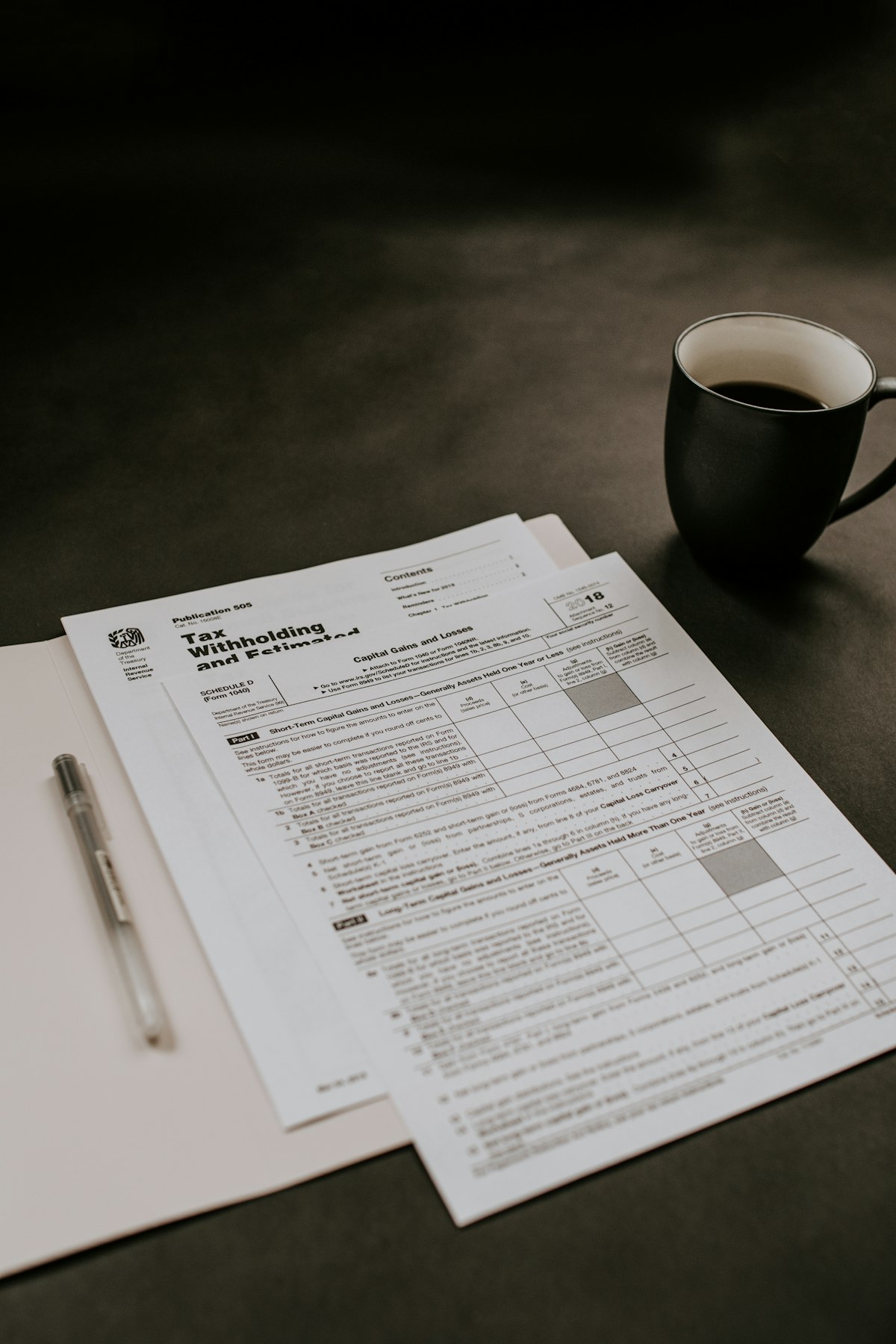
The tax treatment, what the ATO actually allows in 2026
Three rules govern whether debt recycling holds up under audit:
- Purpose at the time of drawdown. When the money leaves your loan account, it must be used to acquire an income-producing asset. The asset's later performance is irrelevant. If you draw $50,000 into Split B and use $48,000 for ETFs and $2,000 to pay a school fee, you have just contaminated the entire $50,000 split.
- Tracing. The borrowed funds must be traceable from the loan account to the investment account. A direct transfer is best. A bounce through an offset (with other personal cash mixed in) is the most common mistake we see, and is precisely what TD 2008/27 warns against.
- Continuing connection. If you sell the investment and use the proceeds for a personal purpose, the deduction stops for that portion of the loan. The deductibility follows the asset, not the loan account.
What is deductible:
- Interest on Split B, including capitalised interest in some structures (though the Tax Office prefers paid interest).
- Loan setup fees on the investment split, amortised over the loan term or 5 years, whichever is shorter.
- Ongoing borrowing costs related to Split B.
What is not deductible:
- Interest on Split A (your owner-occupier portion).
- Stamp duty paid on the home purchase.
- Repayments of principal on Split B.
- Any loss of capital on a sold investment (that is a CGT event, not an income tax deduction).

Risks and where people get it wrong
Debt recycling is leverage. Leverage amplifies returns and amplifies losses. The risks worth understanding:
- Market risk. If the ASX 200 drops 30%, your $200,000 portfolio drops to $140,000, but your $200,000 loan is unchanged. Your equity position is wiped out for that allocation. You still owe the money.
- Interest rate risk. The strategy was built when rates were 3 to 4%. At 6.39%, it still works, but the after-tax yield gap narrows. Stress-test at 8%.
- Income shock. If you lose your job or drop a partner's income, the deductible interest is still owed, and your tax refunds are smaller (because you have less income to deduct against).
- Behavioural risk. The single biggest failure mode is bailing out at the bottom of a market and crystallising losses while still holding the debt.
- Structural mistakes. Mixing personal and investment cash, paying brokerage out of the wrong account, parking the borrowed money in an offset for weeks before investing it. Each one of these can contaminate deductibility.
- Concentration risk. Loading the whole portfolio into one stock or one sector. If you bought BHP in 2011, you waited a decade to recover.
- Property sequence risk. If you debt-recycle into an investment property at the top of a cycle and rents fall short of holding costs, you cannot easily sell down 10% the way you can with ETFs.
The mitigants are boring and effective: stress-test cashflow at 8% interest, single income, and a 30% market drop. Keep three to six months of expenses in offset against Split A (the non-deductible split, so the cash is doing useful work). Diversify the investment portfolio. Have a tax accountant who knows debt recycling review the structure annually.
Is debt recycling right for you? A 5-question test
Run yourself through these. You want a yes on all five.
- Stable income: do you and your partner have at least three years of secure, predictable household income above $200,000?
- Mortgage with equity headroom: do you owe at least $400,000 on a property with at least 20% equity?
- Surplus cashflow: are you currently saving more than $2,000 per month after all expenses and existing repayments?
- Time horizon: are you comfortable not touching the investment portfolio for at least 7 years, and ideally 10 to 15?
- Risk tolerance: could you stomach watching your $200,000 portfolio drop to $130,000 in a year, without selling?
For couples with strong income but no current property equity, the strategy can also be run inside an SMSF property investment structure, although the rules and costs are very different.

How to structure your loans for debt recycling
This is where a broker earns their fee. The structure choices that matter:
- Lender choice. Not all lenders allow clean splits. Some force you into a single facility with sub-accounts that are hard to track. Others charge a fee per split (sometimes $10 per month per split, which adds up if you create 10 splits over a decade). The big four are workable. A few non-majors are excellent. A handful are explicitly not.
- Number of splits. Many advisers recommend one split per recycle round. So if you recycle four times in a year, you end up with four Split B sub-accounts. This makes asset-by-asset tracing crystal clear if you ever sell one investment and need to repay only that portion of debt.
- Repayment type. Interest-only on Split B is standard. It preserves the deductible debt at full size. P&I on Split A, with extra repayments accelerating the recycle.
- Fixed vs variable. Variable is the most flexible. Fixed rates restrict redraw and split creation. If you want to fix, fix only Split A, and only for two to three years.
- Offset placement. Always on Split A. Never on Split B.
- Rate type. Investment IO splits typically sit 25 to 50 basis points above owner-occupier P&I. Factor this in.
Three lenders we currently recommend for debt recycling in 2026 (depending on your full profile):
| Lender | Strength | Best for |
|---|---|---|
| Macquarie | Genuinely good split functionality, clear sub-accounts | Active recyclers wanting many sub-splits |
| NAB | Flexible offset and split structure | Higher-income borrowers, big portfolios |
| ING | Well-priced for straightforward two-split structures | Simpler setups, fewer recycle rounds |
The wrong lender can quietly add $1,500 a year in monthly split fees and break your tracing every time you redraw. The right one makes the whole strategy almost frictionless.
If you want a sense of the cash flow impact before you commit, our home loan offset calculator shows what your current offset balance is actually saving you, and where the recycling opportunity sits. For face-to-face structuring, the Norwest mortgage broker team handles most Hills District debt recycling clients. You can also get in touch for a written structure recommendation.
Get a tailored debt recycling plan
We structure debt recycling loans for around 30 to 40 Hills District households a year. Most of our recycling clients started with one quiet 30-minute call. We look at your loan, your offset, your equity, your income, and the lenders that fit your profile. We then build a recycling plan that works at today's rates and stress-tests at 8%.
If you are sitting on a $200,000+ offset balance against a Sydney mortgage and have not yet recycled, you are paying for the privilege of safe cash. Let us run the numbers.
Call Sumit Joshi on 1300 11 7976, or book a strategy call at www.ryroloancentre.com.au.
Quick answers
Frequently asked questions
Debt recycling is the process of converting non-deductible home loan debt into deductible investment debt by paying down your mortgage and re-borrowing against the equity to buy income-producing assets. It is fully legal in Australia and has been used by accountants and financial advisers for over two decades. The Australian Taxation Office accepts it provided the borrowed funds are used to acquire income-producing investments and the loan splits are kept structurally clean. The relevant guidance is in Taxation Ruling TR 95/25 and Tax Determination TD 2008/27. You are not exploiting a loophole. You are using the same rules that govern every business loan in the country.
The tax saving depends on your marginal rate and the size of your deductible debt. As a rough rule, a couple on a 37% marginal rate with $400,000 of recycled debt at 6.5% saves around $9,620 a year in tax. By Year 10 of a typical Hills District debt-recycling plan on a $900,000 starting mortgage, annual tax savings often sit between $15,000 and $18,000. The bigger win is compounded growth on the investment portfolio. Over 10 to 15 years, the combined effect of tax savings plus investment returns typically delivers $400,000 to $700,000 more wealth than a non-recycling household with the same starting position.
You need a financial adviser if you are deciding what to invest in, especially for managed funds or insurance products. You need a tax accountant to validate the loan structure and lodge tax returns correctly. You need a mortgage broker to structure the loan splits and pick a lender that allows clean recycling. The three professionals work together. You can self-manage if you are investing in broad-market ETFs and confident on tax mechanics, but most clients we work with run a quarterly check-in with an accountant in the first two years to lock in correct treatment, then reduce to annual reviews.
A line of credit is a single revolving loan facility where personal and investment borrowings can blur together, which makes apportioning interest deductibility complex and risky. Debt recycling uses separate loan splits, each with a distinct purpose, which makes the deductibility crystal clear. A line of credit can be used for debt recycling but is the worst possible tool for it because every redraw mixes purposes. Always use clean split sub-accounts. If your bank only offers lines of credit, switch lenders before starting.
Diversified ETFs are the most common starting point because they are liquid, low-cost, transparent, and easy to track for tax purposes. Australian shares with full franking are particularly tax-efficient. Listed investment companies (LICs) work similarly. Direct shares are workable if you diversify across at least 15 holdings. Investment property works for larger allocations but ties up your liquidity. Avoid speculative assets, capital growth-only investments with no income stream, and anything you might be tempted to sell within five years.
You can, but only partially. Most fixed rate loans restrict redraw and additional repayments to a fixed annual cap (often $10,000 to $30,000 per year). They also restrict creating new splits while in the fixed period. The practical answer is to fix only part of your owner-occupier loan (Split A), keep Split B variable, and time your recycling rounds to align with extra repayment caps. Once a fixed period ends, you regain full flexibility. We usually recommend keeping at least 50% variable for active recyclers.
Your investments fall in market value but your loan balance does not. You are sitting on a paper loss while still paying deductible interest. The strategy assumes you do not sell during downturns. Historically, broad Australian and global share markets have recovered every prior drawdown within four to six years. If your cashflow can comfortably cover the interest with single income, no rate cuts, and no portfolio income, you ride it out. The deductibility continues uninterrupted. The risk is forced selling during a drawdown because of income loss, which is why cashflow stress testing matters.
Step one is choosing a lender that allows clean split sub-accounts at no per-split fee (or a low one). Step two is restructuring your existing loan into a non-deductible Split A and creating an empty Split B with a credit limit equal to your planned recycling amount. Step three is paying down Split A with available cash to reduce the home loan principal. Step four is redrawing Split B and transferring the funds directly to an investment account, then investing within five business days. Steps three and four repeat every time you have new cash to recycle, typically two to four times per year.
Yes, although the dollar gains are smaller than on a $900k or $1.2m mortgage. On a $600,000 mortgage with $100,000 to recycle in Year 1 and $1,000 per month of surplus repayments, a household on a 37% marginal rate typically converts the full mortgage to deductible investment debt within 10 to 12 years and builds a portfolio worth $400,000 to $500,000 in the process. The strategy benefits from compounding, so starting on a smaller mortgage is fine. The threshold question is income stability and surplus cashflow, not the loan size itself.
Your bank knows because the loan splits are visible to them, and the investment split will be set up with an investment loan purpose code. You do not need to disclose your specific investment choices to the bank, but the loan application for Split B will ask the purpose (usually "purchase of shares" or "purchase of managed funds"). Banks are entirely comfortable with debt recycling. Your accountant must know, because they will lodge the deductions in your tax return. Your financial adviser, if you use one, must know because the strategy interacts with portfolio construction.
Investor specialists · No broker fees
Buying property to invest? Get the structure right first.
Most investors lose money on the lender mix, not the property. We structure your loans across personal, joint, trust and SMSF so you don't pay more tax and don't hit serviceability walls.
Book a Free Investor Strategy Call