Last updated: July 2026.
Buying Land and Building in Sydney (2026): How Land Loans and Construction Loans Work Together
Buying a block in a new North-West estate and building on it is two purchases, not one, funded by two different loans that have to hand over to each other cleanly. Get the sequence wrong and you can end up holding a vacant block you are paying interest on, with a build you cannot yet fund. This guide walks the journey, from the land loan and its deposit to the staged construction drawdowns, and shows how the money and timing connect at each step.
Quick answer: When you buy land then build, you usually take a land loan first (often needing a larger deposit than a standard home loan, commonly around 20%, and paid interest-only while you hold the block), then a construction loan that releases funds in stages as the build hits milestones. The two are frequently packaged into one land-and-construction facility so you avoid paying two lots of fees. During the build you pay interest only on what has been drawn, and the loan flips to principal and interest once the home is finished and passes its completion valuation.
Why buying land then building is a two-loan journey
Buying land then building splits into two financing events because a bank cannot lend against a house that does not exist yet. First you settle on the land with its own finance (a land loan). Then, once you have a fixed-price building contract and council approval, a construction loan funds the build in progress payments. Many lenders bundle both into a single land-and-construction loan so the land debt rolls straight into the build without a second application and second round of fees.
This differs from a home and land package, where you sign one contract for both the block and the finished home. Here we are talking about the messier, more common Hills District scenario: you buy a titled block in an estate like Box Hill, Marsden Park or Kellyville, then choose your own builder and design later.

Step 1: the land loan and the deposit you actually need
A land loan is a mortgage secured against a vacant block, and lenders treat it as slightly higher risk than a standard home loan, so the deposit is usually larger. Vacant land produces no rent and sells more slowly in a downturn, so many lenders want around 20% down to keep you under an 80% loan-to-value ratio. Some will go to 90% or even 95% of the land value, but above 80% you pay lenders mortgage insurance (LMI), and a few will not touch vacant land at high LVRs at all.
Land loan appetite varies wildly between lenders. Block size, the estate, whether it is registered, and how soon you intend to build all move the goalposts. Our land loans service exists because this is the step where buyers get knocked back for reasons that have nothing to do with their income.
The interest-only holding period
While you own the land but have not started building, you typically pay the land loan interest-only. There is no house to live in and no rent coming in, so this is money out the door with nothing to show for it yet. On a $600,000 block at an illustrative 6.5% (rates move, treat this as a rough guide), interest-only is roughly $3,250 a month. The longer the gap between buying the land and starting the build, the more this adds up, which is why timing the two loans tightly is worth real money.
Step 2: the construction loan and staged drawdowns
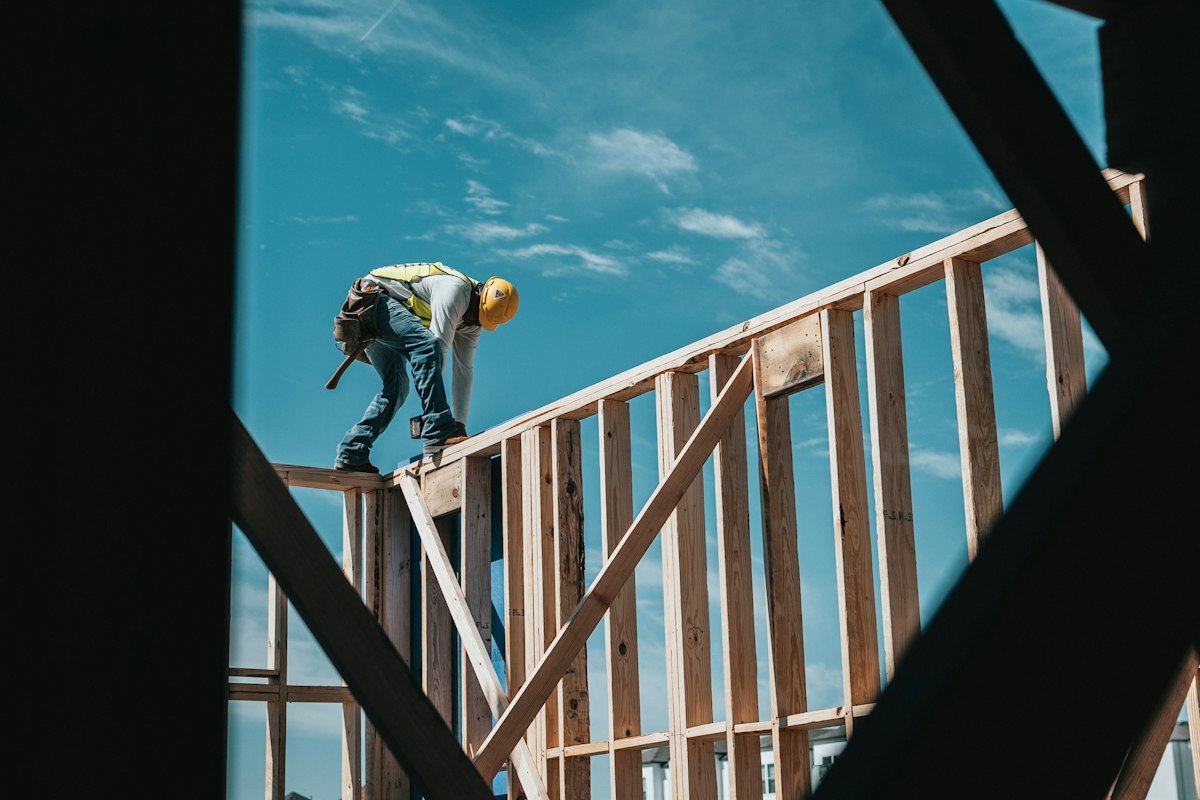
A construction loan does not hand you the full build amount up front. Instead it releases funds in progress payments (drawdowns) as your builder completes each stage, so you only ever pay interest on the money actually drawn. Your builder submits a progress claim (an invoice) at each milestone, the lender usually sends a valuer to confirm the stage is genuinely complete, and only then does it release that slice of funds directly to the builder.
There are five standard construction stages. The exact percentages vary slightly by lender and state, but across most of Australia the split looks like this:
| Stage | What happens | Typical % of build funds released |
|---|---|---|
| Deposit | Paid to builder to start (often from your own funds) | 5% |
| Base / slab | Foundations and concrete slab poured | 15% |
| Frame | Timber or steel frame and roof trusses up | 20% |
| Lock-up | External walls, windows and doors in, home can be "locked up" | 20% |
| Fixing / fit-out | Internal fit-out: cabinetry, plaster, doors, tiling | 30% |
| Completion | Final finishes, handover, keys | 10% |
Because the loan draws down in steps, your repayments during the build are interest-only and they climb as more of the loan is released. Your bill after the frame stage is small; by fixing stage it is much larger because most of the money is now out. Once the final completion drawdown is made, the loan converts to principal and interest, and you start repaying the whole balance like a normal mortgage. Our full construction loan process guide breaks down what happens at each drawdown and what the valuer is checking.
Valuations at each stage
Lenders order an "as-if-complete" valuation before they approve the construction loan, based on your plans and the fixed-price contract, to confirm the finished home will be worth enough to cover the loan. At each drawdown, a valuer confirms the stage is actually done before releasing money, and a final inspection at completion confirms the home matches the contract. If it values up strongly, your equity position improves, which can help if you later want to use that equity for an investment property.
How deposits and equity work across both loans
Your deposit does double duty across both loans, and lenders assess the whole project on the combined figure. Say you buy a $600,000 block and plan a $500,000 build, a $1.1 million project. A lender working to 80% will lend up to $880,000 across both loans, so you need to bring roughly $220,000 plus stamp duty and costs, part at land settlement and part into the build.
If you already own the land, or bought it years ago and it has risen in value, that equity counts as your deposit toward the construction loan. Buyers who bought a Hills District block before the recent run-up sometimes have enough equity in the land alone to fund most of the build deposit without fresh savings.
Timing traps that catch land-and-build buyers
The most common land-and-build trap is a build-start deadline written into your loan. Lenders like to see construction begin within a set window after the land settles, often around 12 months, because an idle block is not becoming a valuable home. Miss that window and your construction finance may need re-approval under whatever policy and rates apply then, which can be less generous than your original approval.
Other timing traps worth planning around:
- Unregistered land delays. If the estate is not titled, settlement, and therefore your whole build timeline, waits on the developer.
- Finance approval expiry. Approvals lapse, commonly after 90 days. A long gap between approval and land settlement can force a fresh assessment.
- Fixed-price contract expiry. Builders' quotes have a shelf life. If your build start slips, the price you were quoted may rise before you lock it in.
- Rate movements between the two loans. The rate on your land loan and the rate on your construction loan are set when each draws down, so a long hold exposes you to rate changes in between.
If you are weighing a fresh build against buying an older home and redoing it, our knockdown rebuild cost guide for Sydney compares the numbers, and if a second dwelling is part of your plan, the granny flat loan guide covers financing an additional build on the block.
Why the fixed-price building contract matters so much
A fixed-price building contract is what makes your construction loan work, because the lender funds the build against that contracted figure. Without a fixed price, the bank cannot size the loan or run its as-if-complete valuation. It also protects you: it caps what you pay the builder, so a mid-build blowout is the builder's problem, not a fresh drawdown you have to fund.
Read the contract for what it excludes. "Fixed price" often leaves out site costs (heavy earthworks, rock removal, retaining walls), landscaping, driveways and fencing. On a sloping or rocky Hills District block, those site costs can add tens of thousands that are not in the headline build price and not covered by the construction loan unless you build them in. Line up your contract and your finance together so the loan covers the real, all-in cost.
Should you use a land-and-construction loan or two separate loans?
A single land-and-construction facility is the tidier option for most buyers because it rolls the land debt straight into the build with one application and one set of fees. You settle the land, hold it interest-only, then the same facility funds the staged drawdowns without a second approval. This is the structure our construction loans team sets up for Hills District builders.
Separate loans can make sense if you are buying land now with no firm build plan, or want to shop a different lender for the build later. The downside is two applications, two lots of setup costs, and the risk that construction finance is harder to get, or pricier, when you finally apply. If you are building within a year or so, the combined facility is almost always cheaper and lower-stress.
Ready to map out your land and build the smart way?
RyRo Loan Centre structures land and construction finance for buyers across Kellyville and the wider Hills District, from the first block in a new Box Hill or Marsden Park release through to the completion drawdown on the finished home. We will confirm you qualify for the finished-project repayment before you settle the land, line your fixed-price contract up with the right lender, and keep the land loan and construction loan handing over cleanly so you are not paying holding costs a day longer than you need to.
Book a free strategy call or get in touch and we will map your land-and-build numbers before you commit to a block. If you want the broader picture on financing a build, start with our construction loan process guide.
Quick answers
Frequently asked questions
For a standard residential block, most lenders want around 20% of the land value to keep you under an 80% loan-to-value ratio and avoid lenders mortgage insurance. Some will go to 90% or even 95%, but you pay LMI above 80%, and a few will not lend on vacant land at high LVRs at all. Appetite varies a lot by lender, block size and whether the land is registered, which is why matching to the right lender through our land loans service matters here.
Yes. While you hold the block and have not started construction, you typically pay the land loan interest-only. There is no house to live in and no rent coming in, so this is a pure holding cost. On a $600,000 block at an illustrative 6.5%, that is roughly $3,250 a month, though rates move and this is a rough guide only. The longer the gap before you start building, the more this cost adds up, which is why buyers keep the two loans tight together.
A construction loan releases money in five standard progress payments as the build hits milestones: base or slab (around 15%), frame (around 20%), lock-up (around 20%), fixing or fit-out (around 30%) and completion (around 10%), usually after an initial deposit of about 5%. Your builder claims each stage, a valuer confirms it is done, and the lender releases that slice directly to the builder. You pay interest only on what has been drawn, so repayments climb as the build progresses.
Yes, and most buyers do. A land-and-construction loan rolls the land debt straight into the build under one application and one set of fees. You settle the land, hold it interest-only, then the same facility funds the staged construction drawdowns without a second full approval. It is tidier and usually cheaper than taking two separate loans, especially when you plan to build within a year of buying the block.
Often, yes. Many lenders write a build-start window into the loan, commonly around 12 months from land settlement, because an idle block is riskier for them than a block becoming a home. If you miss that window, your construction finance may need re-approval under current policy and rates, which can be less generous than your original approval. Always confirm the build-start requirement before you settle the land, and plan your builder and contract timeline around it.
Lenders order an "as-if-complete" valuation before approving the loan, based on your plans and fixed-price contract, to confirm the finished home will cover the debt. A valuer then confirms each stage is complete before releasing that drawdown, and a final inspection at completion checks the home matches the contract. If it values up well, your equity position strengthens.
Your loan stays interest-only throughout the build, with repayments rising as each drawdown is released. Once the final completion payment is made and the home passes its completion valuation, the loan converts to principal and interest and you repay the whole balance like a standard mortgage. Budget for that jump: your repayment at completion is materially higher than the interest-only holding cost on the land, so confirm you qualify for the end position up front.
A fixed-price contract caps what you pay the builder for the contracted work, and the lender funds your construction loan against that figure. It commonly excludes site costs like heavy earthworks, rock removal and retaining walls, plus landscaping, driveways and fencing. On a sloping or rocky Hills District block, those exclusions can add tens of thousands the construction loan will not cover unless you build them into the finance. Read the exclusions carefully and line up your contract and loan together.
Not necessarily cheaper, but more flexible. Buying a block then choosing your own builder lets you control the design and shop builders on price, while a home and land package bundles both into one contract for simplicity. The separate-block route means two loans and more timing risk. Which wins depends on the block, the builder and how well you time the two loans, so model both before you commit.
Construction specialists · No broker fees
Building? Get the lender right before you sign.
We have construction loan specialists who handle the progress payments, builder paperwork and valuation back-and-forth so you stay focused on the build.
Book a Free Construction Call