RyRo Loan Centre

Commercial property finance, Sydney

Commercial Property Portfolio and Warehouse Finance in Sydney, One Line for Multiple Assets

If you hold or trade several commercial or investment properties, a portfolio or warehouse facility funds the whole pool under one line, so you draw down as you buy and repay as you sell, without a new loan each time.

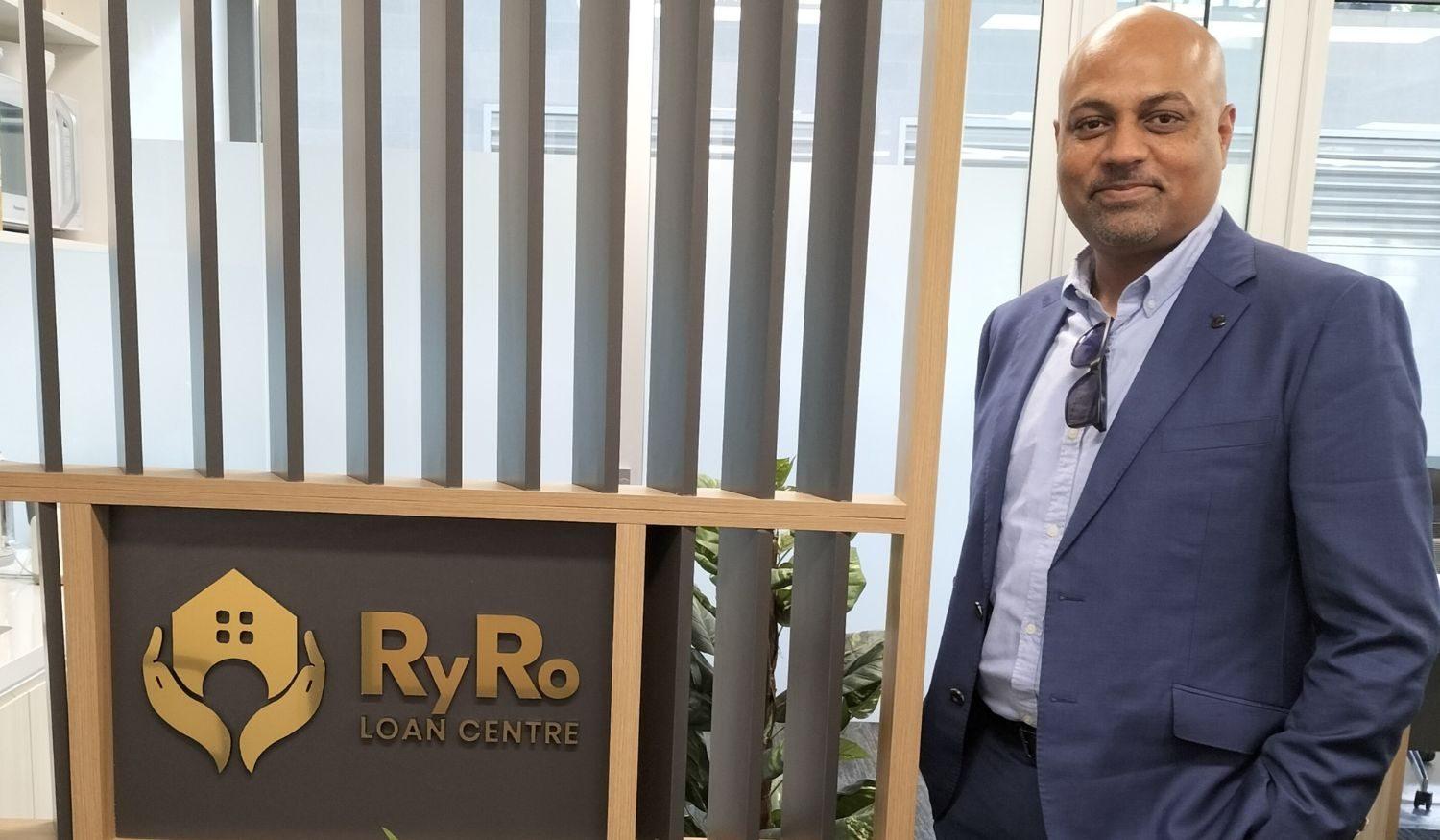
Sumit Joshi, principal broker at RyRo Loan Centre

Book your free warehouse facility assessment

Tell us about your portfolio and how you transact. No obligation.

Free, no obligation. We generally respond within an hour.

Google5.0360+ Google reviews
  • One facility for several commercial or investment properties
  • Non-bank and private funders compared for you
  • Buying one warehouse? We arrange that loan too
  • Google5.0 from 360+ Google reviews
  • 2,500+ clients helped
  • Credit Rep 446824
  • Commonwealth Bank Elite Broker FY23-24 badge
  • Westpac Gold Broker badge
  • ANZ Premium Broker badge
  • NAB Premium Broker badge
  • AFG Broker Assurance Recognition 2024 badge
  • AFG Excellence Awards finalist 2025 badge
  • MFAA 10 year member badge

Updated November 2026

Google5.0From 360+ Google reviews Read them
Clients helped
2,500+
Broker fees on home loans
$0
Loan review, no credit check
Free

Some of the banks and lenders we compare for you

  • Commonwealth Bank
  • Westpac
  • NAB
  • ANZ
  • St.George
  • Bank of Melbourne
  • Suncorp Bank
  • BOQ
  • Great Southern Bank
  • Beyond Bank
  • People First Bank (formerly Heritage Bank)
  • Teachers Mutual Bank
  • Hume Bank
  • IMB
  • Newcastle Permanent
  • QBANK
  • UniBank
  • Bank Australia
  • BankSA
  • Credit Union SA
  • Macquarie
  • ING

Warehouse facilities, updated November 2026

One Facility Instead of a Dozen Separate Loans

If you hold a portfolio or churn stock, setting up a fresh loan for every purchase is slow and expensive. A property warehouse facility approves you once against a pool of assets and an overall limit, then lets you draw down as you buy and repay as you sell, all within agreed rules.

You get speed, funding certainty, and one set of terms to manage instead of many.

RyRo Loan Centre structures warehouse and portfolio facilities with the non-bank and private lenders active in this space, sized to your assets and how you transact. It pairs naturally with our commercial development finance for developers warehousing residual stock. See the full commercial lending range or contact us to talk through your portfolio.

1

Facility to hold and fund your whole pool

50+

Bank, non-bank, and private lenders compared

13+

Years structuring commercial and portfolio finance

Sumit · 0:49
Mortgages do not need to be complicatedSumit Joshi, RyRo Loan Centre · Sumit: from home loans to commercial, 50+ lendersWatch with transcript

Two meanings of warehouse finance

Warehouse property loans vs warehouse facilities

Quick answer

Which one do you need?

This page is about warehouse facilities: one line of credit across several commercial or investment properties. If you are buying a single warehouse, factory or industrial unit, you need a commercial property loan for that one property instead. We arrange both.

A warehouse facility compared with a loan to buy a warehouse property
What changesWarehouse facilityWarehouse property loan
What it fundsA pool of commercial or investment propertiesOne warehouse or industrial property
Who it suitsDevelopers with stock, active investors, portfolio holdersBusiness owners buying premises, investors, SMSFs
How it worksA limit you draw down and repay as you buy and sellA term loan secured by that property
Usual lendersMostly non-bank and private lendersBanks, non-banks and specialist lenders
What the lender testsThe whole pool, eligibility rules and your track recordThe property, the lease or your business, your deposit

General comparison only. Each lender sets its own policy, limits and pricing.

Buying one warehouse or industrial property?

That is a commercial property loan. Lenders assess an owner-occupier (your business moves in) on the business's trading income, and an investor on the rent, the lease and the tenant. Our commercial property loans page covers deposits, documents and how each is assessed.

Owner-occupier or investor: what the lender reads

Owner-occupier. Expect to show business financials, tax returns or BAS, and how long the business has traded. Rent you stop paying to a landlord can help the case. Lenders also look at whether the building suits other buyers, in case it ever has to be sold.

Investor. The lease is the heart of the application: the rent, the term left, options to renew, rent reviews and who pays the outgoings. A vacant warehouse can still be financed, but fewer lenders will look at it and the deposit is usually larger.

Buying a warehouse through your SMSF

A warehouse used in a business is generally business real property, which a self-managed super fund can buy with a limited recourse borrowing arrangement. Since 10 August 2026 a new SMSF loan can only be used for business real property, not residential property. Many business owners have their fund buy the premises and lease them back at market rent.

Your SMSF accountant or adviser confirms the fund can do it; we arrange the loan through our commercial SMSF lending service. General information, not financial or tax advice.

Talk about my warehouse purchase

Free, no obligation, before you make an offer.

From a client who bought property, on Google

David

a year ago on Google

Google

I recommend RyRO loan centre to whoever is acquiring a loan professional. Ryro has helped me with equipment finances and acquiring property highly regarded.

Sumit · 1:27
Buying the premises he runs his business fromSumit Joshi, RyRo Loan Centre · a client bought his business premisesWatch with transcript

How it works

How a Property Warehouse Facility Works

A warehouse facility is a revolving line secured against a pool of properties. The lender sets an overall limit and an advance rate, and you operate within it as your portfolio moves:

Desk calculator beside a laptop and printed budget charts
One limit, one set of terms. You draw down as you buy and free up capacity as you sell.Photo: Jakub Żerdzicki / Unsplash
  1. Step 1

    Approval against your pool

    The lender approves an overall facility limit against your pool of eligible assets

  2. Step 2

    Draw down to buy

    You draw down against each new acquisition, up to the agreed advance rate

  3. Step 3

    Repay as you sell

    As you sell or refinance an asset, the drawn balance reduces and capacity is freed up

  4. Step 4

    Concentration limits

    Concentration limits keep any single property or asset type from dominating the pool

  5. Step 5

    Quick funding for new assets

    New assets are funded quickly, provided they meet the agreed eligibility rules

  6. Step 6

    One relationship

    One set of terms, one facility, and one relationship to manage across the portfolio

Who it suits

Who a Warehouse Facility Is For

A facility pays for itself when you transact often. These are the borrowers it suits best.
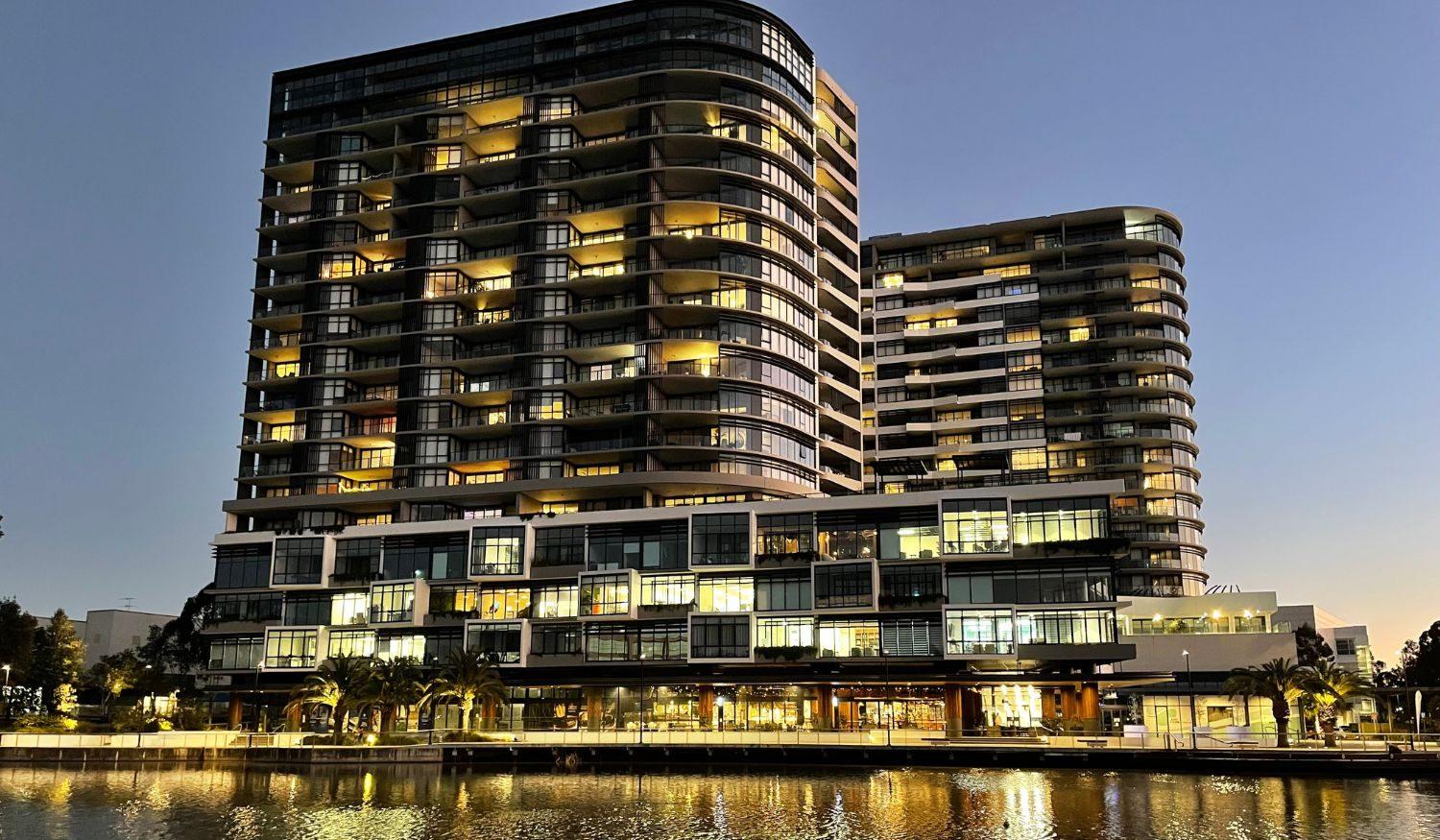
Tower A Esplanade building at Norwest at dusk, home of RyRo Loan Centre
Commercial property at Norwest, where our office is. Portfolios often mix office, retail and industrial.
  • Developers holding residual stock

    Move completed, unsold units onto one line and sell down in your own time.

    Read the detail

    Warehouse completed, unsold units from a finished project onto one line, so you sell down in your own time instead of discounting to clear a construction loan. Pairs with our development finance for a smooth transition from build to hold.

  • Active commercial and residential investors

    Pre-approved capacity to move quickly when the next deal appears.

    Read the detail

    If you regularly acquire, reposition, and sell property, a warehouse gives you pre-approved capacity to move quickly, without a fresh application and set of fees for every deal.

  • Portfolio holders consolidating debt

    Roll a spread of loans into one facility with one set of terms.

    Read the detail

    Roll a spread of individual loans into one facility with a single set of terms, simpler reporting, and clearer capacity for your next acquisition.

Portfolio finance

Financing Multiple Commercial Properties

If you own several commercial or investment properties, financing each one with its own standalone loan gets expensive and slow.

Commercial property portfolio finance, of which a warehouse facility is the most flexible form, lets you fund the whole pool under one agreement. You get a single set of terms, clearer capacity for your next purchase, and the ability to move fast when a deal appears, rather than starting a fresh application every time.

Portfolio finance suits investors holding a spread of commercial assets, developers carrying completed stock, and buyers who acquire and recycle property. We compare it against keeping loans separate, some borrowers are better served by individual facilities, and structure the option that gives you the best mix of cost, flexibility, and speed. See our commercial property loans for single-asset finance, or our investment loans for residential portfolios.

Free PDF · 4 pages
Photo: Fiona Smallwood / Unsplash

Commercial and development

Commercial Property Portfolio Finance Guide

  • How portfolio and warehouse facilities work
  • How facilities are sized against your assets
  • When separate loans are cheaper

Facility sizing

How Warehouse Facilities Are Sized

A warehouse is sized to the pool, not a single property. Advance rates depend on asset quality and liquidity. Here is how lenders generally treat each kind of asset:

How lenders generally treat each asset type in a warehouse facility
Asset Type in PoolHow lenders treat itNotes
Completed residential unitsAmong the strongest advance ratesLiquid, readily saleable stock
Standard commercial (metro)Among the strongest advance ratesLeased office, retail, industrial
Residual development stockAccepted by many facility lendersTitled, completed unsold units
Specialised commercialLower, deal by dealChildcare, service stations, single tenant
Land and non-income assetsLower or excludedDepends on lender and pool mix

Advance rates and limits vary by lender, asset mix, and sponsor track record. We assess your pool and structure the facility before you commit.

Leases explained

Leases and WALE in plain English

A facility lender is partly lending against the rent across your pool. For each leased property, these are the terms they read first, and what each one means for you.

Quick answer

What is WALE?

WALE stands for weighted average lease expiry: the average time left on a property's leases, weighted by how much rent each lease pays. A longer WALE means the income is locked in for longer, so lenders see less risk.

A WALE example, worked through

Say one property in your pool has two tenants. Tenant A pays 60% of the total rent and has 5 years left on its lease. Tenant B pays 40% and has 2 years left.

WALE by income is (60% x 5 years) + (40% x 2 years) = 3 + 0.8 = 3.8 years. A single-tenant property is simpler: its WALE is just the time left on that one lease. Lenders can also look at the WALE of the whole pool.

These numbers are an illustration of the sum, not a lender requirement. Each lender decides what WALE it is comfortable with for the property and location.

  • Lease term and options

    How long the tenant is locked in, and any options to renew. Lenders count the firm term first, because the tenant decides whether to take up an option.
  • Tenant strength

    Who the tenant is and how long it has traded. An established business on a long lease reads very differently from a new one.
  • Rent reviews

    Fixed or CPI-linked increases written into the lease. They show how the income should grow over the term.
  • Outgoings

    Whether the tenant pays rates, insurance and maintenance (a net lease) or you do (a gross lease). It changes the income the lender counts.
  • Vacancy and re-leasing

    How easy the space would be to lease again. Location, access and fit-out all matter, and concentration limits stop one weak lease from dragging down the pool.

Before a lender says yes

What lenders look at before they approve a facility

A facility lender assesses the pool and the sponsor behind it. Pricing depends on the assets as much as on you, and every lender sets its own limits, so we check these points before your file goes anywhere.

  • The asset mix

    Property types, locations and how readily each one would sell or re-lease. Liquid assets support a larger limit.

  • Concentration

    How much of the pool sits in one property, one tenant or one asset type. Lenders cap each so the pool stays balanced.

  • Valuations

    Valuations ordered by the lender on each eligible asset. Advance rates are set against these figures.

  • Income and exit

    Rent across the pool, the sales you plan, and how the facility will be repaid or refinanced.

  • Equity in the pool

    The gap between the facility limit and the value of your assets. More equity usually means more room to move.

  • You and your history

    Your track record with property, other debts and your credit file. Past credit issues are not an automatic no.

Past credit issues?

Some commercial and private lenders look at the whole picture: the assets, your equity and your position today. Pricing and deposit will reflect the risk. Tell us up front so we only approach lenders whose policy can consider it.

Free assessment

Want One Facility for Your Whole Portfolio?

Tell us about your assets and how you transact, we'll identify the right structure and lenders. Buying a single warehouse instead? Same call, same broker.

  • Google5.0 from 360+ Google reviews
  • 2,500+ clients helped
  • Credit Rep 446824

Param Singh

4 years ago on Google

Google

Exceptional service, best with complex loan needs. Highly recommend for any loan service. Sumit is extremely supportive, very prompt and provides you the with the best solution for your finances and investments!! Highly recommended!!

Commercial deals

Commercial property and business purchases we have financed

Sumit has arranged finance for commercial property purchases, development projects, petrol stations, motels and franchise businesses. They are examples, not a limit: we can look at finance for any commercial property or portfolio.

  • Commercial property

    Finance arranged for commercial property purchases.

  • Petrol station purchase

    Finance arranged for the purchase of an operating petrol station.

  • Motel purchases

    Finance arranged for buyers of motel businesses.

  • Development finance

    Funding arranged for property development projects.

Franchise purchases our clients have financed

  • Subway logo
  • Gelatissimo logo
  • Soul Origin logo
  • Oporto logo
  • Ultra Tune logo
  • Ozzy Tyres logo
  • BTOWN Tyres

Logos and brand names are trademarks of their respective owners and are shown only to identify businesses whose purchase RyRo Loan Centre has arranged finance for. Their display does not imply any endorsement of, or affiliation with, RyRo Loan Centre.

Why RyRo

Why Portfolio Investors Choose RyRo

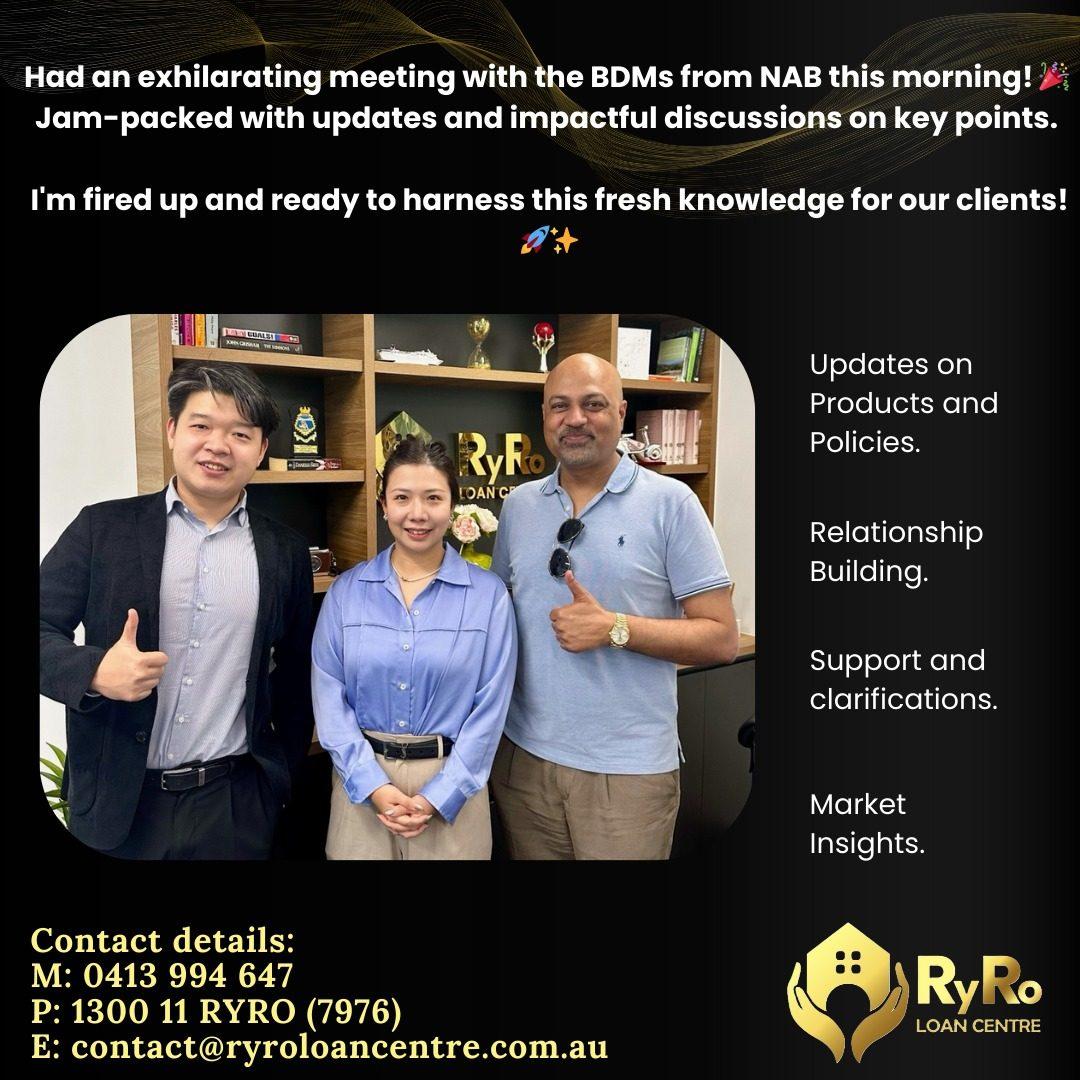
Sumit Joshi meeting NAB business development managers at the RyRo office
Sumit Joshi JPMeeting lender business development managers at the Norwest office.
  • We know the non-bank and private warehouse market

    Warehouse facilities live outside standard bank policy. We know which non-bank and private funders offer them, how they price flexibility, and which asset mixes they will support, so we match your pool to the right line.
  • We structure eligibility to fit how you trade

    The value of a warehouse is in the rules. We set eligibility and concentration criteria that match how you actually buy and sell, so new deals draw down quickly instead of getting stuck in re-approval.
  • We weigh flexibility against cost

    A warehouse usually prices higher than a single bank loan. We model the total picture, rate, fees, speed, and per-deal savings, so you know whether the facility pays for itself given how often you transact.
  • Clear on every cost

    Some warehouse facilities carry a broker fee for the structuring work involved. Where one applies, we disclose it in writing upfront so you can weigh it against the lender access and time it saves you.

From first call to settlement

  1. Step 1

    Free call

    The property or pool, how you buy and sell, and your timing.

  2. Step 2

    Documents listed

    Leases, financials and valuations, gathered once.

  3. Step 3

    Lenders compared

    Bank, non-bank and private options, with the trade-offs shown.

  4. Step 4

    Approval to settlement

    Kathryn tracks valuation, approval and settlement with you.

Sumit · 0:54
We guide you every step until settlementSumit Joshi, RyRo Loan Centre · every step until settlement, any loan or entityWatch with transcript

Google reviews

What Our Customers Say

Rated 5.0 out of 5 from 360+ Google reviews. These clients came to us for commercial loans, business loans and growing property portfolios. Quoted word for word. Read all 360+ Google reviews.

Google

5.0

From 360+ Google reviews

Sumit · 1:18
Cheaper rate or the right strategy?Sumit Joshi, RyRo Loan CentreWatch with transcript
Read all 360+ Google reviews
  • Info Nue Design Homes

    a year ago on Google

    Google

    Our experience with Sumit and his team was wonderful. They guided us from start to finish in a professional and unbiased manner. They are a team of highly qualified well experienced professionals who can be relied upon for your personal and commercial loan needs. We strongly recommend them for your financial requirements and wish them all the very best.

    Info Nue Design Homes

    Googlea year ago on Google

    Our experience with Sumit and his team was wonderful. They guided us from start to finish in a professional and unbiased manner. They are a team of highly qualified well experienced professionals who can be relied upon for your personal and commercial loan needs. We strongly recommend them for your financial requirements and wish them all the very best.

  • Kirill Charonov

    4 years ago on Google

    Google

    Had a great experience with this excellent mortgage broker, very professional service. RyRo was able to tailor a business loan suitable to my situation and negotiate with the lender on excellent terms and interest rates. Would highly recommend.

  • Anshuman Bhardwaj

    2 years ago on Google

    Google

    Brilliant team and very responsive I am taking help of Sumit and his team for almost 10 years now from my first home to my 6th investment property . He is very helpful, ,informative and respectful to all my questions and needs. Always available and his Team (Dean) also is very knowledgeable . I have recommended them to lot of my friends and also heard good about them. Thanks team and keep up the good work

    Anshuman Bhardwaj

    Google2 years ago on Google

    Brilliant team and very responsive I am taking help of Sumit and his team for almost 10 years now from my first home to my 6th investment property . He is very helpful, ,informative and respectful to all my questions and needs. Always available and his Team (Dean) also is very knowledgeable . I have recommended them to lot of my friends and also heard good about them. Thanks team and keep up the good work

  • Raj Parasher

    3 years ago on Google

    Google

    We had a wonderful experience with Ryro Loan Centre, Sumit is very professional, knowledgable and resourceful. The whole process was very smooth, we highly recommend using Sumit for your home or business loan requirements. All the best!

Free tools

Calculators for commercial property investors

A quick starting point before we look at your pool. Commercial facilities often run over shorter terms than home loans, so set the term your lender quotes.

Estimate repayments on a drawn balance

Enter a drawn amount, an interest rate to test and the term. It is an estimate only: facility pricing depends on the pool, the leases and the lender.
Open the full loan repayment calculator
% a year
How often you repay

Your estimate

Monthly repayment

$3,597

360 repayments over 30 years at 6% a year.

Total interest
$695,029
Total repaid
$1,295,029
Assumptions

Assumes the rate stays the same for the whole loan, repayments at the end of each period, and no fees. Extra repayments assume your lender keeps your repayment the same so the loan finishes early.

Figures last checked .

This is an estimate, not financial advice. Results are a guide only. Speak to a broker for accurate figures based on your situation.

Free, no obligation. Your numbers go with your enquiry.

5.0360+ Google reviews

FAQs

Commercial Property Warehouse FAQs

Have a question not covered here? View all FAQs or ask us directly.

Warehouse and portfolio facilities

What is a commercial property warehouse facility?

+
A property warehouse facility is a single revolving line of credit that holds and funds multiple commercial or investment properties under one agreement, rather than a separate loan for each asset. Active investors, developers holding completed stock, and buyers who acquire and recycle assets use a warehouse to draw down as they buy, and repay as they sell or refinance, without arranging a new loan each time. The facility is secured against the pool of properties held, and the lender sets an overall limit and advance rate against that pool.

Who uses a property warehouse facility?

+
Warehouse facilities suit borrowers who transact regularly rather than hold a single asset for the long term. That includes developers warehousing completed, unsold residual stock, active commercial and residential investors building or churning a portfolio, buyers who acquire properties to reposition and sell, and aggregators assembling sites. If you are constantly setting up new individual loans, paying establishment fees each time, and waiting on separate approvals, a single warehouse line can cut cost, save time, and give you certainty of funding as opportunities arise.

How is a warehouse facility different from separate loans?

+
With separate loans, each property has its own application, valuation, approval, and set of fees, and adding a new asset means starting again. A warehouse facility approves you once against a pool and an overall limit, then lets you draw down against new acquisitions and repay as you sell, within agreed parameters. This means faster access to capital, one set of terms to manage, and the ability to move quickly when a deal appears. The trade-off is that warehouse facilities are usually provided by non-bank and private lenders and are priced for that flexibility.

How much can I borrow under a warehouse facility?

+
Warehouse facilities are sized to the pool of assets rather than a single loan to value ratio. The lender sets an overall facility limit and an advance rate against eligible properties. Standard, readily saleable commercial and residential stock usually attracts the strongest advance rates, with lower rates for specialised or less liquid assets. Concentration limits usually apply, so no single property or asset type dominates the pool. The stronger and more liquid your assets, and the more experienced you are as a sponsor, the higher the limit and advance rate a lender will support.

What types of property can sit in a warehouse facility?

+
Eligible assets depend on the lender, but a warehouse can typically hold completed residential units, commercial offices, retail, and industrial property, and in some cases residual development stock and land. Lenders prefer liquid, readily saleable assets and apply lower advance rates or exclusions to specialised property such as childcare, service stations, or single-tenant assets with short leases. We structure the facility so your core stock is funded efficiently and any harder assets are placed with a lender who understands them.

How quickly can I draw down to buy a new property?

+
That is the main advantage of a warehouse line. Once the facility is established and a new property meets the agreed eligibility and concentration rules, drawdown is usually much quicker than arranging a fresh loan, since the credit assessment and terms are already in place. This lets you act on time-sensitive purchases and auctions with funding certainty. We set the eligibility criteria up front so you know exactly what will and will not qualify before you bid or exchange.

Which lenders provide property warehouse facilities?

+
Warehouse and portfolio facilities are mostly provided by non-bank and private lenders rather than the major banks, because they require flexibility on asset mix, drawdown, and repayment that sits outside standard bank credit policy. Pricing reflects that flexibility, so a warehouse line usually carries a higher rate than a single bank commercial loan, offset by speed, certainty, and lower per-deal cost. We compare the non-bank and private funders active in this space and match the facility to your asset pool, transaction frequency, and exit strategy.

Does RyRo charge fees for arranging a warehouse facility?

+
Warehouse and portfolio facilities are complex, structured transactions, and some carry a broker fee reflecting the work involved in packaging and negotiating them. Where a fee applies, we disclose it in writing before you proceed so you can weigh it against the value of the structure, the lender access, and the time and per-deal cost the facility saves you. For simpler facilities we are often paid by the lender. Either way, you always know the full cost before committing, with no hidden charges.

Can I finance multiple commercial properties under one loan?

+
Yes. Commercial property portfolio finance, including warehouse facilities, is designed exactly for this. Instead of a separate loan per property, the lender approves an overall facility against a pool of assets and an advance rate, and you fund each property within it. This cuts per-deal fees and approval time and gives you clearer capacity for your next purchase. It suits investors and developers who transact regularly. Buyers holding a single long-term asset are usually better off with a standard commercial loan.

What is commercial property portfolio finance?

+
Commercial property portfolio finance is any structure that funds several commercial or investment properties together rather than one by one. A warehouse facility is the most flexible form, a revolving line you draw down and repay as you buy and sell. Other structures include a single term facility secured across the pool. The right approach depends on how often you transact, your asset mix, and your exit. We compare portfolio finance against separate loans and structure whichever gives you the best cost, flexibility, and speed.

Buying a warehouse or industrial property

Can I buy an industrial warehouse with a commercial loan?

+
Yes. Buying a warehouse, factory or industrial unit is a commercial property purchase, so it is funded with a commercial property loan rather than a home loan. The lender looks at the property, the lease (if it has a tenant), your business or rental income, and your deposit or equity. Industrial property is a mainstream asset for commercial lenders, though specialised buildings and short leases narrow the field. We compare lenders for your property and tell you what deposit to plan for before you make an offer.

What is the difference between buying a warehouse as an owner-occupier and as an investor?

+
An owner-occupier buys the warehouse their own business will run from. The lender mainly tests whether the business can afford the repayments from its trading income. An investor buys a warehouse to lease to someone else. The lender mainly tests the rent, the lease length and the tenant. Lenders treat the two differently on deposit, pricing and documents, and each lender has its own policy. We show you how your purchase will be assessed before you sign a contract.

What do lenders look at before they fund a warehouse purchase?

+
Lenders look at the property and the people behind the loan. On the property: its location and zoning, the building condition, how easy it would be to re-lease or sell, the lease and the tenant, and the valuation. On you: your deposit or equity, your business or rental income, your other debts and your credit history. For investors, the lease and rent carry the most weight. For owner-occupiers, the business financials do. We check each of these before a lender sees your file.

What is WALE and why does it matter to a lender?

+
WALE stands for weighted average lease expiry. It is the average time left on the leases in a property, weighted by how much rent each lease brings in. A single-tenant warehouse with three years left on its lease has a WALE of three years. A longer WALE means the rent is locked in for longer, so lenders see less risk of the property sitting empty. A short WALE does not rule a property out, but it can change which lenders will fund it and on what terms.

Can my SMSF buy a warehouse?

+
Yes, a warehouse used wholly and exclusively in a business is generally business real property, which an SMSF can buy with a limited recourse borrowing arrangement. Since 10 August 2026 a new SMSF loan can only be used for business real property, not residential property. Many business owners have their fund buy the premises and lease them to the business at market rent. Your SMSF accountant or adviser confirms the fund can do it. We arrange the loan through our commercial SMSF lending service.

Can I get warehouse finance with past credit issues?

+
Sometimes, yes. Past credit issues do not automatically rule you out of commercial property finance. Some commercial and private lenders look at the whole picture: the property, your deposit or equity, your business performance today, and what caused the credit issue. Expect pricing and deposit requirements to reflect the extra risk. Tell us about it up front so we only approach lenders whose policy can consider it, rather than collecting declines on your credit file.

Portfolio structure

What is cross-collateralisation?

+
Cross-collateralisation means more than one property secures the same loan or group of loans. It is common in portfolio and warehouse facilities, because the lender looks at the pool as a whole. The upside is flexibility and often a larger total limit. The downside is that selling or refinancing one property can need the lender to agree, and a problem with one asset can affect the others. We explain how each structure ties your properties together before you commit.

Can I add a property to my facility later?

+
Usually, yes, if the facility was set up for it. A warehouse or portfolio facility can allow new properties to be added as long as they meet the eligibility rules agreed with the lender, such as property type, location and concentration limits. Some term facilities need a formal variation and a new valuation instead. We set the rules up front so you know before you bid whether a new purchase can sit inside your existing limit.

Can I refinance several commercial loans into one?

+
Often, yes. Rolling several separate commercial loans into one facility can simplify your reporting, line up your review dates and give you clearer capacity for the next purchase. Whether it saves you money depends on the pricing, break costs on any fixed loans, and how the new lender treats your mix of properties. We compare keeping the loans separate against consolidating them, and show you the full cost of each before you decide.

Free commercial property call

Ready to Fund Your Portfolio Under One Line?

Join 2,500+ Australians who've trusted RyRo Loan Centre. Warehouse and portfolio facility specialists across non-bank and private funders. We structure the facility around how you actually buy and sell.
Sumit Joshi, principal broker at RyRo Loan Centre

Get started

Tell us about your assets and how you transact, we'll identify the right structure and lenders.

Free, no obligation. We generally respond within an hour.

Google5.0360+ Google reviews

We generally respond within an hour. Prefer to pick a time? Book your strategy call online or contact us.

Sumit Joshi of RyRo Loan Centre smiling in a blue suit and gold tie

Sumit Joshi JP

Principal broker, Credit Rep 446824

  • Sumit reads your details and calls you back
  • The right structure and lenders for your pool
  • Any broker fee disclosed in writing before you proceed
Sumit · 1:27
Buying the premises he runs his business fromSumit Joshi, RyRo Loan CentreWatch with transcript

More videos from Sumit

From 360+ Google reviews
5.0
Clients helped
2,500+
Broker fees on home loans
$0
Lenders on our panel, plus private funders for facilities
50+
“RyRo team is very professional and always helpful. When I bought a business recently, I reached out to them for finance and entire process was made very smooth for me. They always respond very quickly and efficiently. I highly recommend them for commercial lending.”
Varinder Verma · Google review

Sumit Joshi JP, Credit Rep 446824. AFG Award Winner 2013 to 2019 and AFG Excellence Awards finalist 2022 to 2026. General information only. Lender policies, pricing and fees change and depend on the property and your circumstances.

Get my free loan review